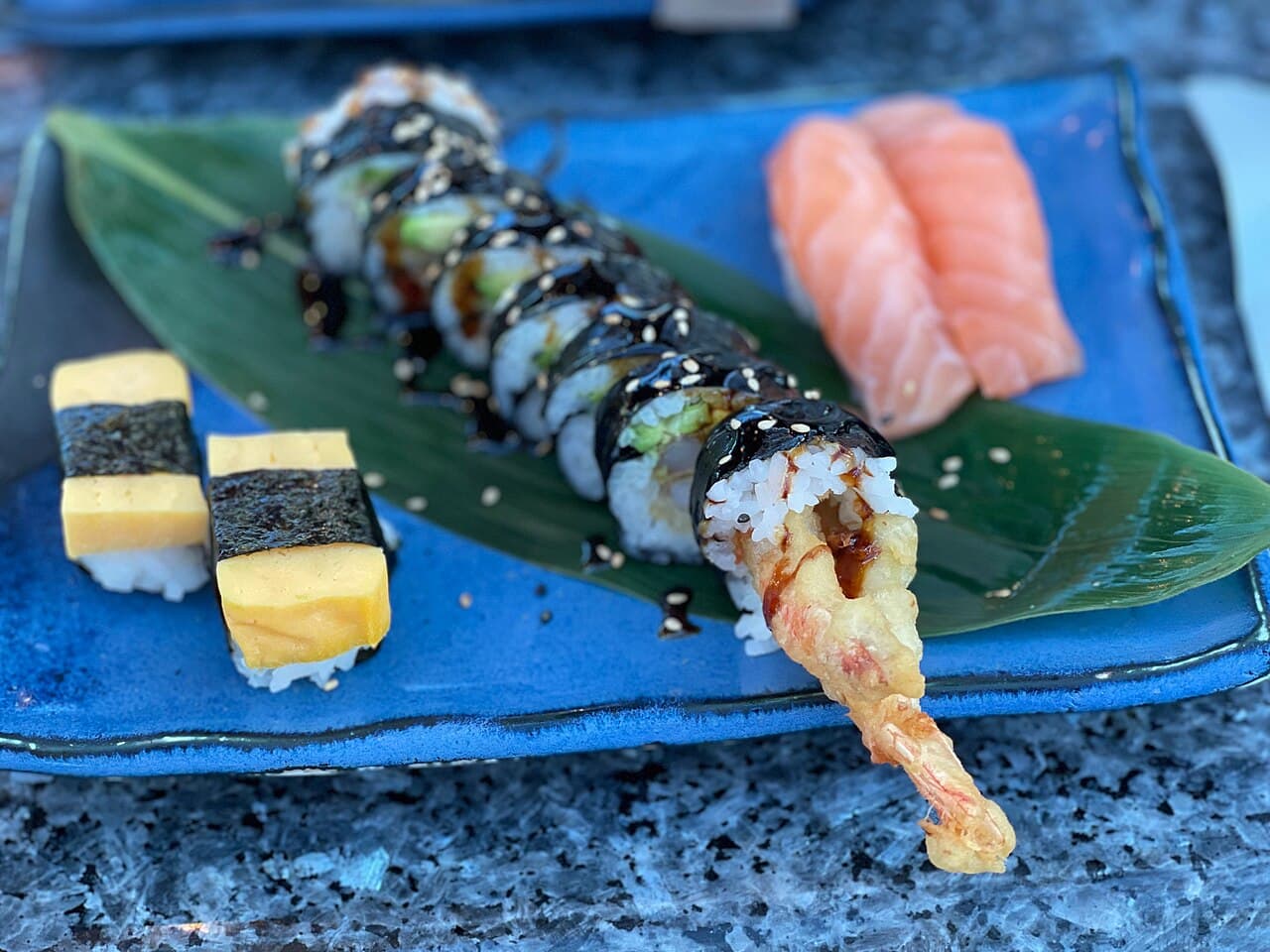
A respected Edomae sushi counter in the Tsukiji Outer Market founded by a third-generation fish wholesaler, with a lunch kaisendon/sushi range and pricier dinner omakase. Entirely seafood-focused, ideal for pescatarians.
Can I eat here?
✓ Diets our editors confirmed in person
🐟
Show this to staff
Pescatarian
肉と鶏肉は食べませんが、魚介は大丈夫です。
Niku to toriniku wa tabemasen ga, gyokai wa daijōbu desu.
Edo-style omakase with multiple types of natural tuna
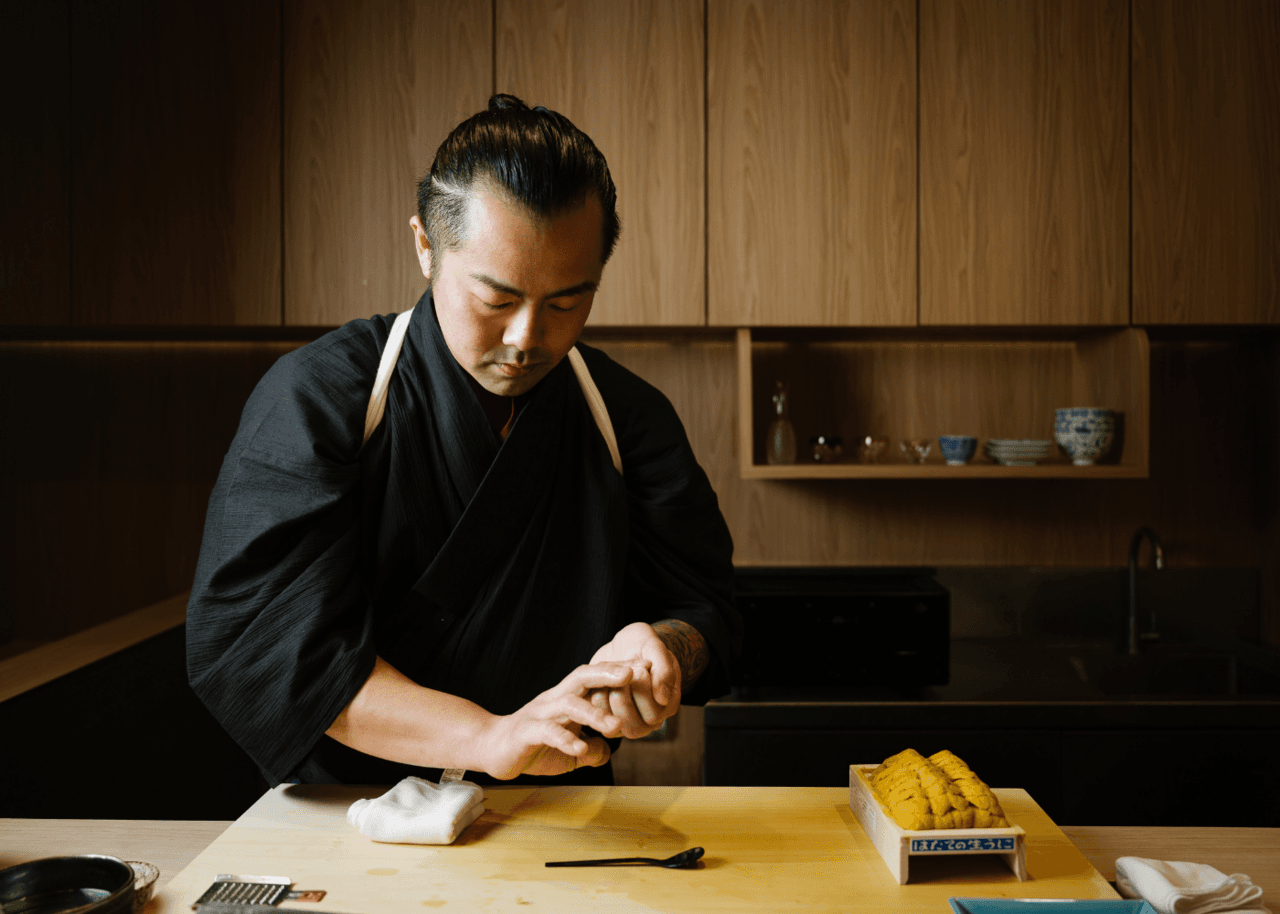
Tsukiji Aozora Sandaime Honten is a working Edomae sushi counter inside the Tsukiji Outer Market, opened in 2004 by the third-generation heir to a local fish wholesaler who wanted the family's own sourcing behind the counter, not just on the plate.
Alongside its natural tuna, the shop puts real craft into hikarimono — the vinegar-cured, silver-skinned fish like aji (horse mackerel), kohada (gizzard shad), and sayori (needlefish) that mark a serious Edomae counter. If you want the marquee dish, order the multi-tuna omakase at dinner: several cuts of natural, wild-caught maguro worked from akami through to toro. At lunch, the kaisendon and nigiri sets are the easier entry point, generally in the ¥3,000–4,000 range, while dinner omakase climbs well past ¥10,000 depending on what the market brought in that morning (as of July 2026).
The room reads as a working counter above a wholesale lineage rather than a polished tasting room — it keeps market hours (open from 11:00 on weekends, closed Tuesdays), and the menu shifts day to day with the catch rather than running off a fixed printed list. It has built a following over two decades, with a Tabelog score of around 3.58 from just over 900 reviews — solid, consistent standing rather than a runaway hit.
There's no English menu, so leaning on the omakase — or simply pointing at the case — is the easiest route for non-Japanese speakers. The counter is small, so reserve ahead for dinner, especially on weekends. It's a fish-and-shellfish menu throughout, which suits pescatarian diners well, but it isn't a vegetarian or halal-certified kitchen — dashi and nikiri glazes are fish-based across the board.
Is there an English menu at Tsukiji Aozora Sandaime Honten?
No — there's no English menu, so ordering the omakase (or simply pointing at the case) is the easiest route for non-Japanese speakers.
Is Tsukiji Aozora Sandaime Honten suitable for vegetarians?
No — it's a fish-and-shellfish menu throughout, with dashi and nikiri glazes that are fish-based across the board. It suits pescatarian diners well, but it isn't vegetarian or halal-certified.
✓ Last verified Jul 2026
Hours and details can change — please confirm before you visit.
A legendary fish izakaya tucked beneath the Yurakucho railway arches since 1946, run by Brit-owner Andy who hand-picks the catch at Toyosu Market each dawn.
★ Edomae nigiri course — soy sauce to fish, all halal-certified
Japan's first halal-certified sushi house, steps from Senso-ji, serving full Edomae nigiri — soy, fish and pickles all halal — with a second-floor prayer room built with the local mosque.
★ Kakinoha-zushi — cured mackerel and salmon pressed onto vinegared rice and wrapped in a persimmon leaf
The Naramachi dining branch of Hiraso, a kakinoha-zushi house founded in Yoshino in 1861, where Nara's landlocked specialty — mackerel or salmon cured and pressed onto vinegared rice, then wrapped in a fragrant persimmon leaf — is served as a sit-down meal a short walk from Sarusawa Pond. Because the toppings are fish, it suits pescatarians but not vegetarians or vegans; the rice is seasoned with vinegar and ordinary soy accompanies it, so it is not gluten-free. Closed Mondays.
A busy Tsukiji Outer Market kaisendon specialist offering around 30 seafood rice bowls made with fish bought daily at Toyosu — the raw-seafood-over-rice bowls are naturally pescatarian. Typically eaten with wheat-containing soy sauce, so not gluten-free unless you request/bring tamari.
A long-established (1889) Edomae sushi house in the Tsukiji Outer Market that stayed open after the market's relocation, serving classic nigiri sets and sashimi. As seafood-and-rice sushi it is naturally pescatarian; not gluten-free (soy sauce contains wheat).