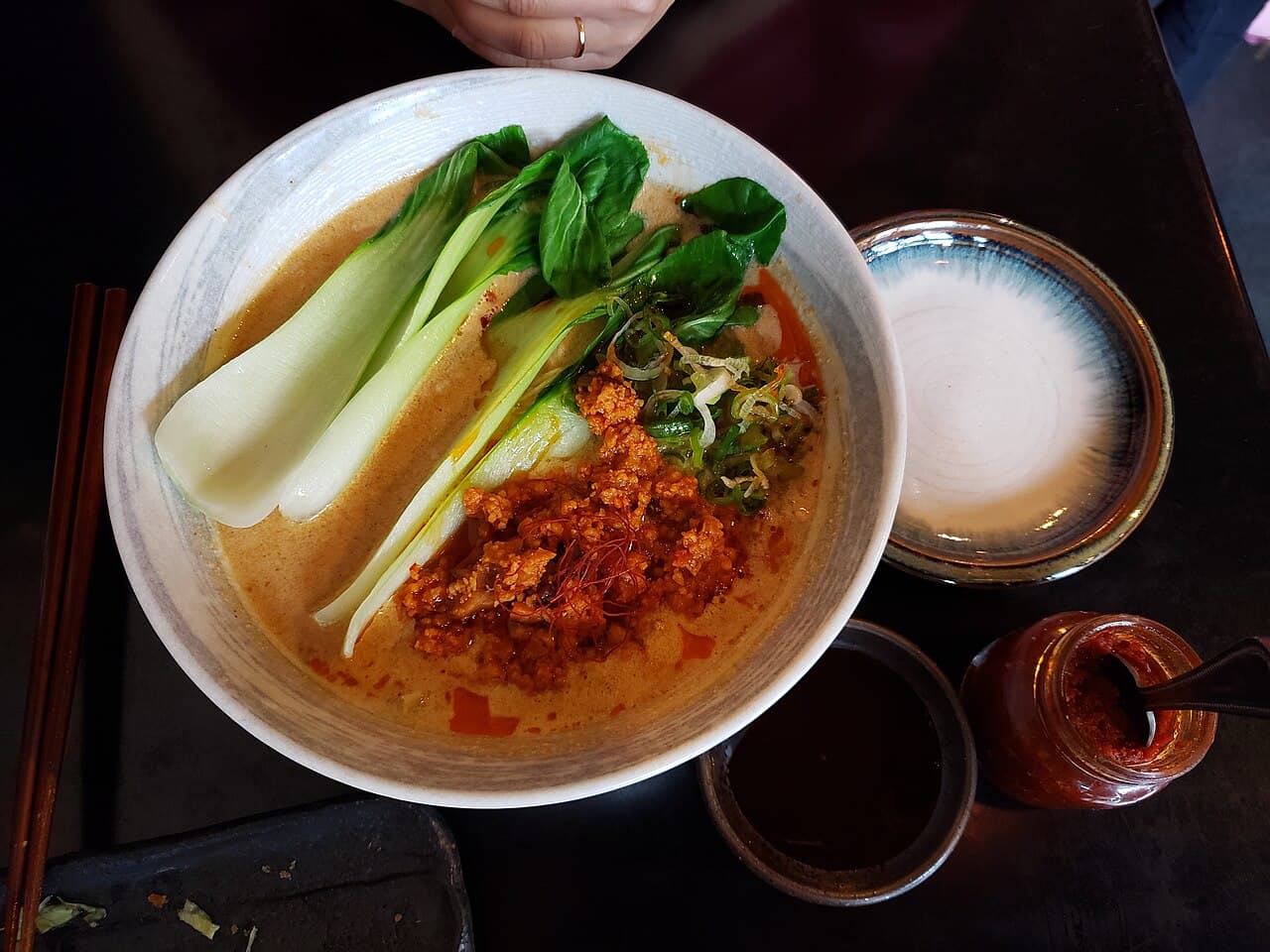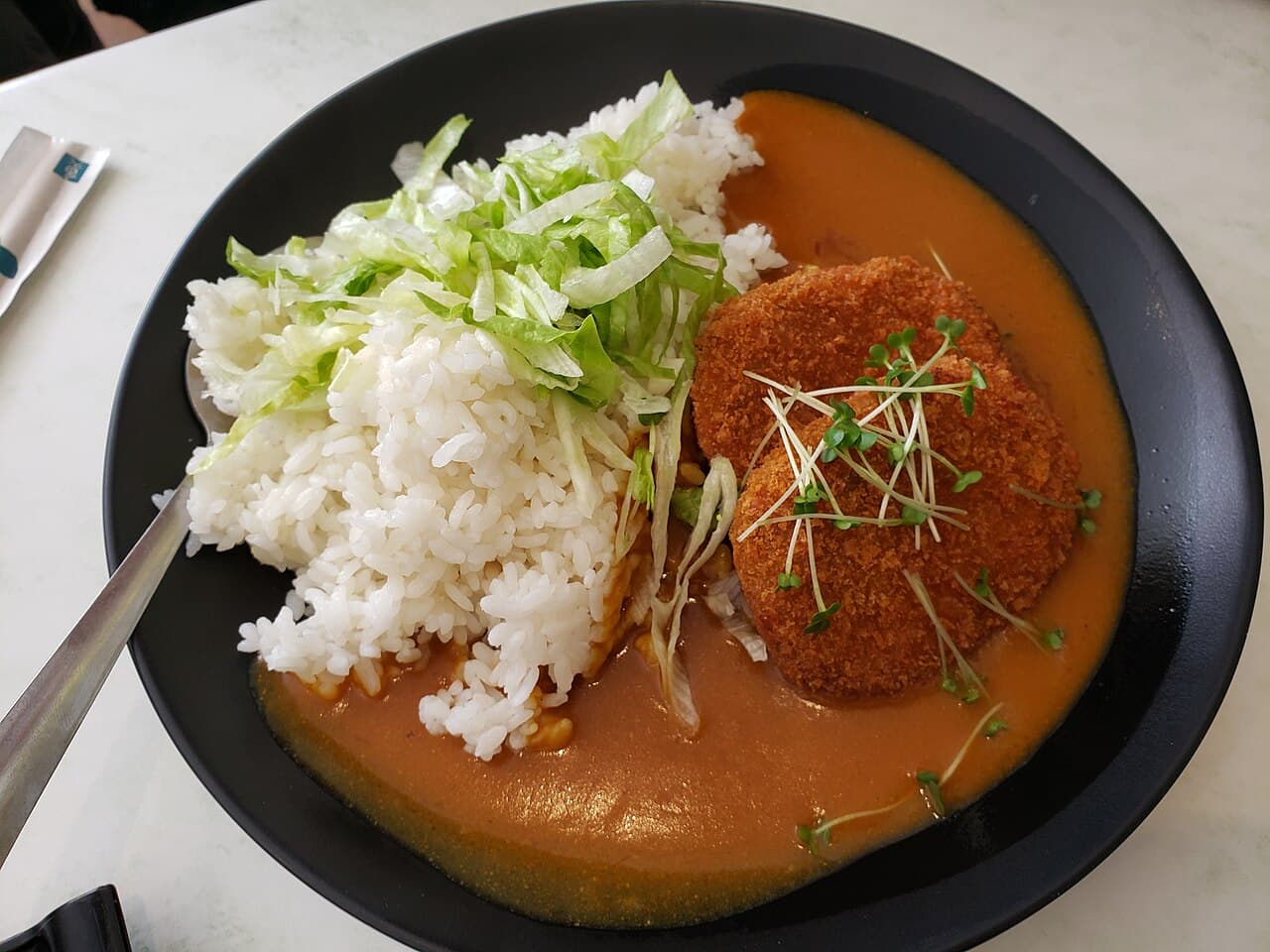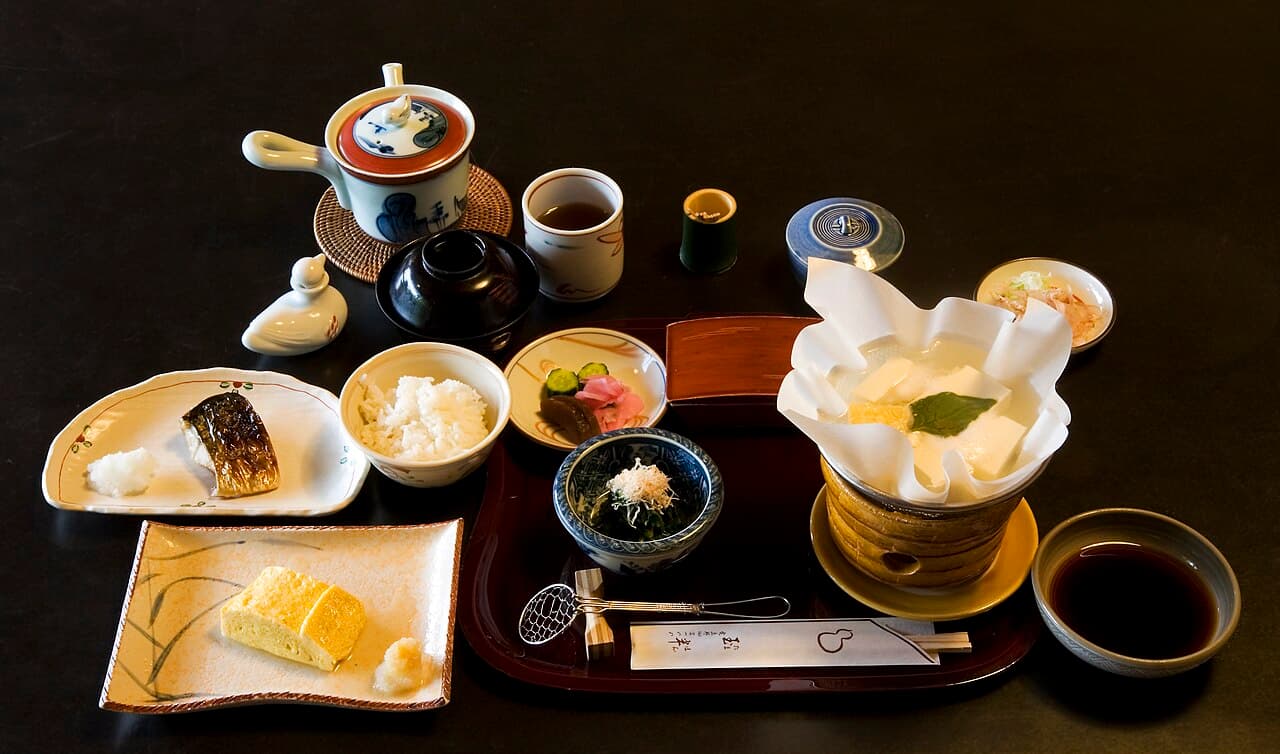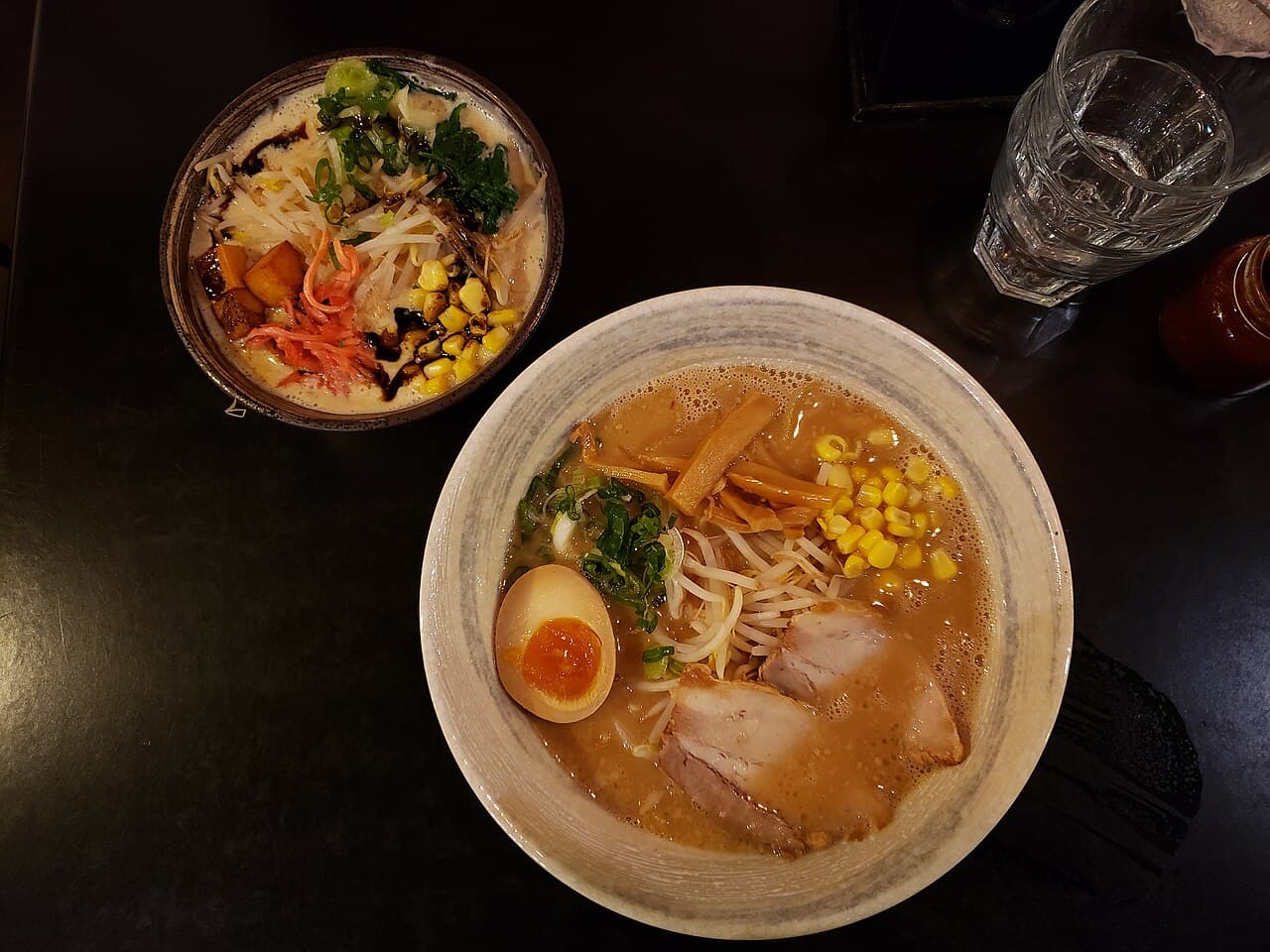
A tiny counter from a French-trained chef whose elegant, tare-free chuka soba held a Michelin star in 2022-2023 and now carries a Michelin Bib Gourmand; also a fixture on Tabelog's Tokyo Ramen Top 100. Expect a queue.
★ Hakata Junjo Ramen — rich tonkotsu broth with ultra-thin noodles
A well-known Fukuoka tonkotsu chain that grew from Tenjin yatai (street stalls), serving rich pork-bone broth with ultra-thin noodles and tender chashu, with convenient branches inside the Hakata Station complex. It is not suitable for any restricted diet — the broth and toppings are pork throughout — and the official site is Japanese-only, so do not assume an English menu.
★ Creamy soy-milk ramen with rice-flour noodles and gluten-free soy sauce
A vegan and gluten-free ramen specialist in Gion run by patissier Yukiko Uno, using rice-flour-and-kelp noodles and gluten-free soy sauce in a soy-milk broth — one of Kyoto's most reliably gluten-free, fish-dashi-free ramen options. The strongest 'dedicated kitchen' claims come from third-party listings rather than the venue itself, so celiac diners should confirm cross-contamination protocol directly with staff.
★ Spicy shoyu chicken ramen with halal-verified ingredients
A halal chicken-ramen counter near Karasuma/Shijo from the Ayam-Ya group, third-party halal-certified (by the Malaysia Halal Corporation), fully pork- and alcohol-free with separate halal storage and tableware, an English menu and a prayer room. It is effectively a lunch-only shop and closes midweek, so check hours before visiting.
★ Creamy soy-milk ramen with a kombu-and-soy broth (no fish dashi)
A small fully-vegan soy-milk ramen shop in quiet Shimogamo, vegan since 2018, with a creamy kombu-and-soy-milk broth and no fish dashi at all — one of the cleanest strict-vegan ramen options in Kyoto. It also avoids the Buddhist five pungent spices (onion and garlic). The noodles contain wheat, so it is vegan but not gluten-free; closed midweek, so check days before visiting.
★ Chilled seiro soba with a robust, strongly seasoned Edo dipping broth
A buckwheat institution founded in 1880 and regarded as the head house of Edo's 'Yabu' soba lineage, known for fragrant chilled seiro and a strongly seasoned dipping broth. The current wooden building reopened in 2014 on the same Awajicho site after a fire.
★ Vegan tempura soba and zaru soba with a plant-based broth
A small standing-style soba shop in Shimokitazawa (opened 2024) serving ni-hachi soba with a fully plant-based kombu broth and toppings, so there is no bonito or fish dashi. The noodles are ni-hachi (80% buckwheat, 20% wheat), so it is vegan but not gluten-free; it is daytime-only and closed early in the week, so check hours before visiting.
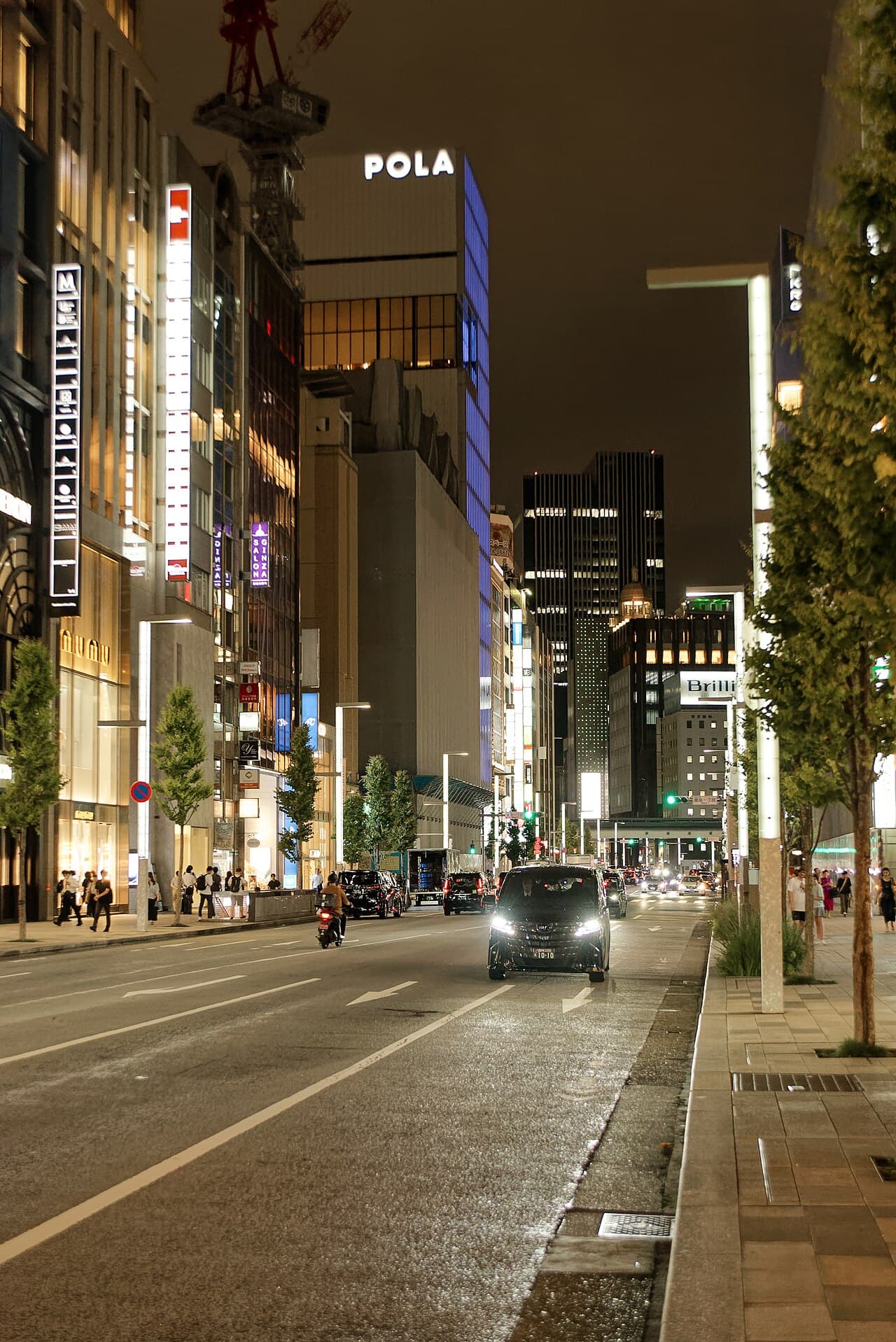
An acclaimed Ginza Edomae sushi counter (chef Hiroyuki Sato) known for a nigiri-only course showcasing aged bluefin tuna. As pure seafood-and-rice sushi it is naturally pescatarian; not gluten-free (soy/vinegar). Cards only; reservations open about two months ahead.
★ Julienned carrot kakiage and prawn / anago tempura
A two-Michelin-star Ginza tempura counter celebrated for exceptionally light frying and its signature julienned-carrot kakiage. Courses are built only on seafood and vegetables (no meat), making it naturally pescatarian; the wheat-flour batter means it is not gluten-free.
The Ginza outpost of a six-generation Wakayama fruit farm builds its ever-changing parfaits from layers of freshly cut estate fruit, soft serve, and homemade jam.
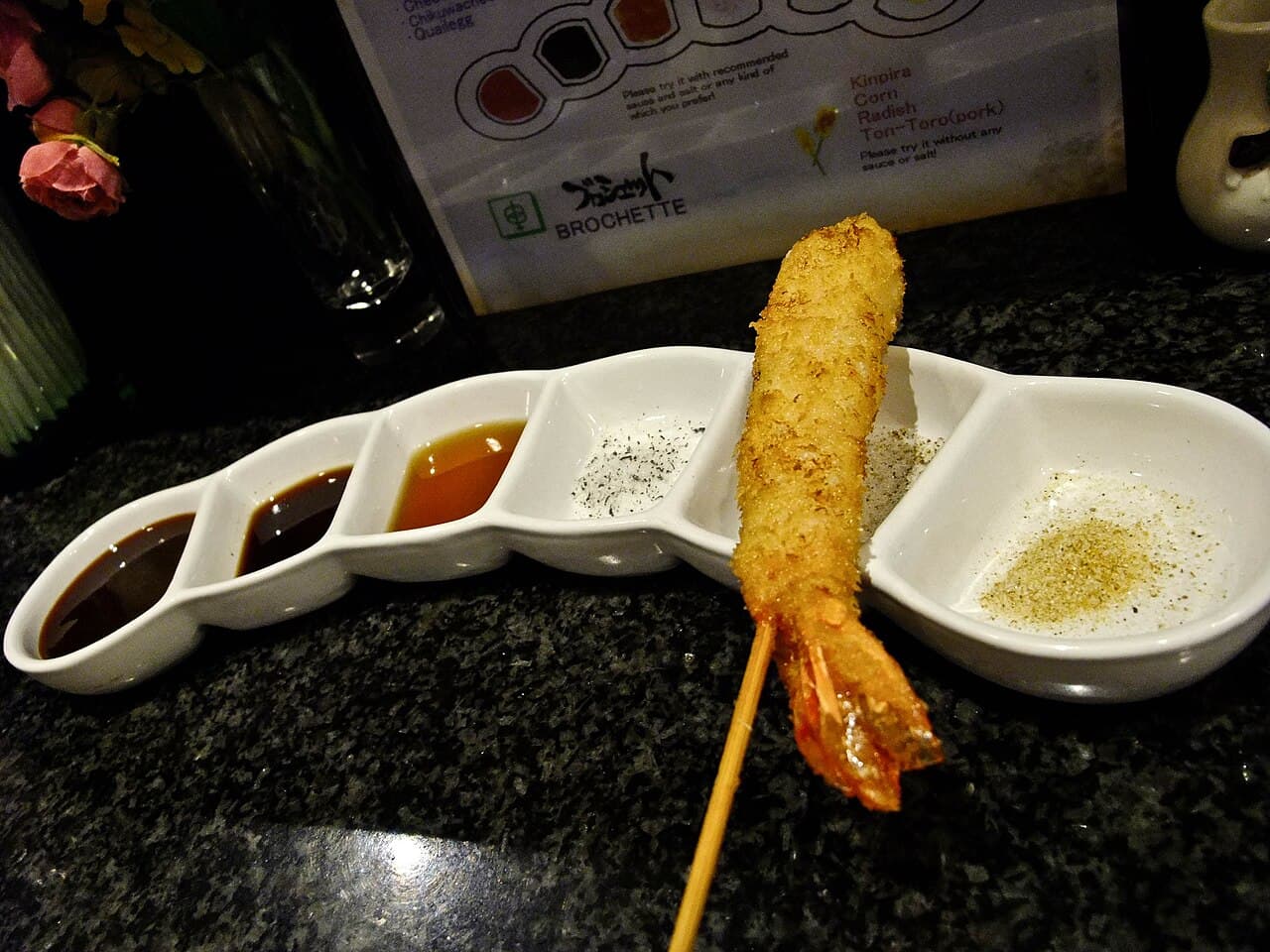
A reservation-only Ginza counter where an entirely gluten-free kushiage omakase is fried in rice oil with rice-flour breadcrumbs — a rare safe haven for coeliacs.
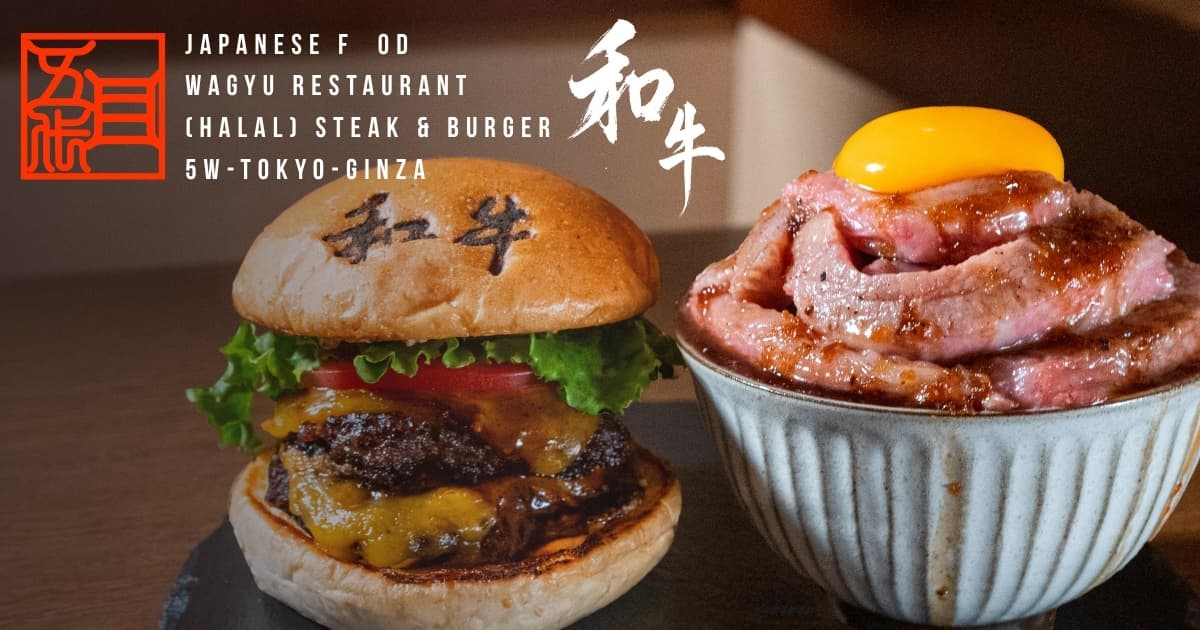
A fifth-generation wagyu family's alcohol-free basement grill in Ginza serving 100% halal-certified Japanese wagyu steaks and burgers, so every traveller can taste real wagyu. (The halal kitchen is the basement venue.)