
Can vegans eat in Japan? Yes — once you know about dashi
The short answer
Yes — vegans can eat very well in Japan, and it is getting easier every year. But the honest catch is one ingredient most newcomers never expect: dashi. So a dish that looks entirely plant-based — a bowl of miso soup, a plate of simmered vegetables, a noodle broth — can still be made with fish. Learn to recognise and ask about dashi, and the whole country opens up.
This is the entry guide to eating plant-based in Japan. From here, branch out to the question that trips up the most people — is ramen vegetarian in Japan? — and to our practical, restaurant-led vegan & vegetarian Tokyo guide.
The one word to learn: dashi
Dashi is the savoury stock at the base of Japanese cooking. The everyday version is made from kombu (dried kelp, which is plant-based) plus katsuobushi — flakes of dried, smoked bonito fish. Some stocks use niboshi (dried baby sardines) instead. The result is invisible: you will not see fish in the bowl, but it is in the broth.
The good news is that a fully plant-based stock is traditional too: kombu dashi (kelp only) and shiitake-kombu dashi (dried mushroom and kelp) are real, widely understood alternatives, especially in temple cooking (what dashi is; vegan shiitake-kombu dashi). That is why the question to ask is never just "is this vegetarian?" but "dashi wa konbu desu ka?" — is the stock kombu (kelp)?
Where vegans win: shojin ryori
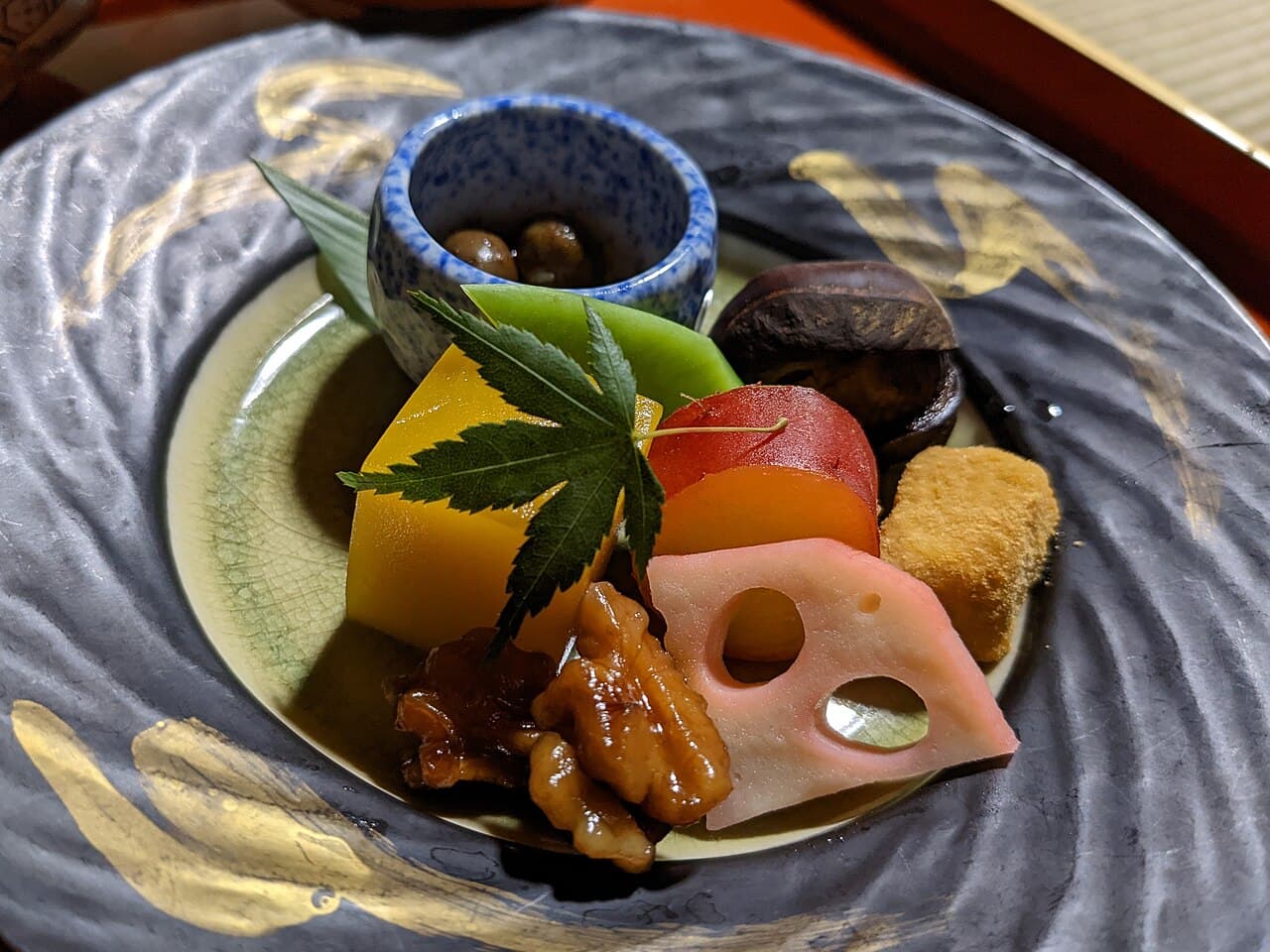
Japan has a centuries-old plant-based cuisine: shojin ryori, the Buddhist temple food served at and around temples. It excludes all meat, fish and even pungent alliums — it is plant-based by doctrine, not as an afterthought. For confident, traditional vegan eating, this is the surest ground; see our shojin and temple-vegetarian guide.
Beyond temples, Tokyo now has world-class dedicated venues — fully vegan ramen, plant-based 'meat and fish' done so well it fools carnivores, and vegan bakeries. The best vegan ramen in Tokyo is a good place to start a trip.
What to watch for (the hidden animal ingredients)
Beyond dashi, these are the usual surprises:
- Bonito flakes (katsuobushi) sprinkled on top of vegetables, tofu or okonomiyaki — they move, so they are easy to spot.
- Egg in tempura batter, in mayonnaise, and brushed on some breads and pastries.
- Honey, gelatin and dairy in desserts and drinks.
- Lard or chicken fat in fried rice, gyoza and some 'vegetable' stir-fries.
- Fish sauce or oyster sauce in otherwise vegetable dishes.
For strict vegans, confirm the stock and the toppings every time — the kitchen is usually happy to tell you.
Naturally plant-based things you can eat almost anywhere
You are not limited to specialist restaurants. Reliable options include zaru soba (cold buckwheat noodles, but check the dipping sauce uses kombu dashi), vegetable tempura (ask about egg in the batter), inari and vegetable sushi, edamame, agedashi-style tofu (confirm the broth), onigiri with umeboshi (pickled plum) or kombu fillings, and the fruit, nuts and plant-milk lattes now standard in convenience stores and cafes.
Say it in Japanese
A card or phone screen showing your needs in Japanese does most of the work. The essentials:
- Watashi wa bīgan desu — I am vegan.
- Niku, sakana, tamago, nyūseihin wa taberaremasen — I cannot eat meat, fish, egg or dairy.
- Dashi wa konbu desu ka? — Is the stock kombu (kelp)?
Keep the full set in our Japanese dietary phrases guide, which you can show staff directly.
Related: gluten and other diets
Many plant-based travellers are also avoiding gluten or dairy. Note that ordinary soy sauce contains wheat, so vegan does not automatically mean gluten-free — if you need both, read our gluten-free Tokyo guide. If your concern is milk and butter rather than all animal products, see dairy-free Tokyo.
The bottom line
Can vegans eat in Japan? Yes — and increasingly well. Master one word (dashi), carry a phrase card, lean on shojin cuisine and the new wave of dedicated vegan kitchens, and you will eat better here than you expect.
Osaka
Also visiting Osaka? See our dedicated guide to vegan restaurants in Osaka.
By dish
Vegan okonomiyaki in Tokyo: 4 real places
Fukuoka & Sapporo
Heading further afield? See our dedicated guides to vegan restaurants in Fukuoka and vegan restaurants in Sapporo.