Pristine raw fish — the purest taste of the sea.
What it is
Sashimi is fresh raw fish or seafood, expertly sliced and served without rice — with soy sauce, wasabi and a garnish of daikon. The cut itself is the craft: angle and thickness change the texture of the very same fish.
What it means
Sashimi celebrates shun — eating each fish at its seasonal peak — and the Japanese reverence for the ingredient in its natural state. Freshness and the knife are everything; there is nowhere to hide.
Freshness & safety — how raw fish is kept safe
Serving fish raw is a discipline. Japan's health ministry (MHLW) sets the playbook for the anisakis parasite: choose fresh fish, remove the innards quickly, inspect each cut by eye, and freeze at −20°C for 24 hours or more — or cook it — to kill the larvae. What does not work is the folklore: normal food amounts of wasabi, vinegar or soy sauce do not kill parasites (as of July 2026).
Mackerel (saba), horse mackerel (aji), bonito (katsuo), salmon and squid are the classic carrier species, which is why good shops freeze or meticulously inspect exactly those. For diners the rule is simple: eat sashimi at professional restaurants with fast fish turnover, and enjoy it chilled and fresh.
Why it's wonderful
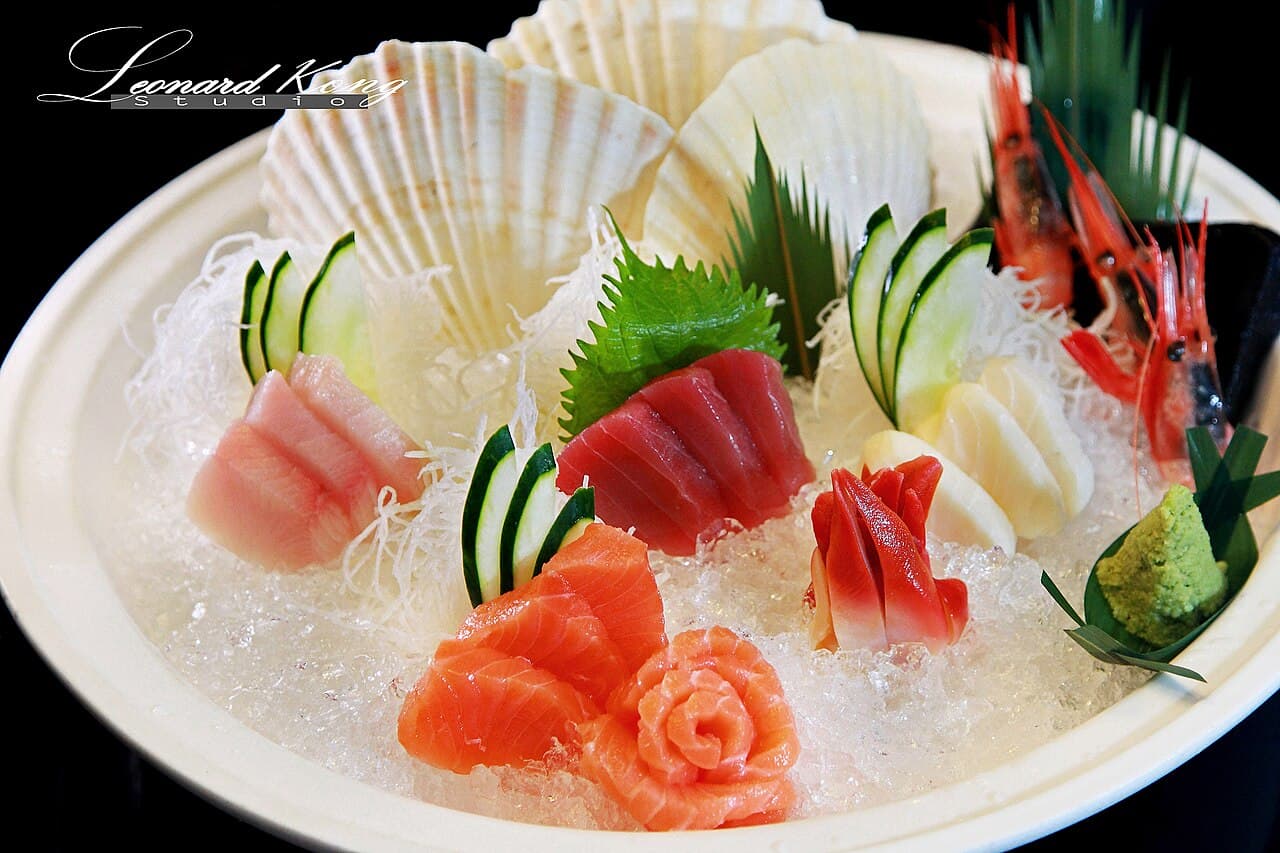
Great sashimi is clean, cool and silky, each variety distinct: lean tuna, buttery toro, sweet shrimp, briny scallop. A dab of wasabi and a light touch of soy is all it needs.
What to order
- Moriawase (assorted platter)
- Maguro & seasonal white fish
- Hotate (scallop), amaebi (sweet shrimp)
- A little wasabi, light soy
For special diets
Naturally pescatarian and gluten-free if you use tamari instead of wheat soy sauce.
FAQ
- What is Sashimi?
- Sashimi is fresh raw fish or seafood, expertly sliced and served without rice — with soy sauce, wasabi and a garnish of shredded daikon. Unlike sushi, there is no vinegared rice; the cut itself is the craft.
- Is Sashimi vegetarian, vegan, halal or gluten-free?
- Naturally pescatarian and gluten-free if you use tamari instead of wheat soy sauce.
- What's the difference between sashimi and sushi?
- Sashimi is sliced raw fish or seafood served without rice; sushi is vinegared rice paired with a topping (often raw fish). No rice = sashimi.
- Is sashimi safe to eat?
- At professional restaurants, yes. Japan's health-ministry playbook — freshness, prompt gutting, visual checks, and freezing at −20°C for 24+ hours for at-risk species — kills the anisakis parasite (as of July 2026).
- Does wasabi kill parasites in raw fish?
- No. Normal food amounts of wasabi, vinegar or soy sauce do not kill anisakis, per Japan's health ministry — only freezing (−20°C for 24+ hours) or proper heating does.
Recipes and preparation vary by restaurant, so this is a general guide. If you're ever unsure, please confirm directly with the venue before you order — they'll appreciate the heads-up.