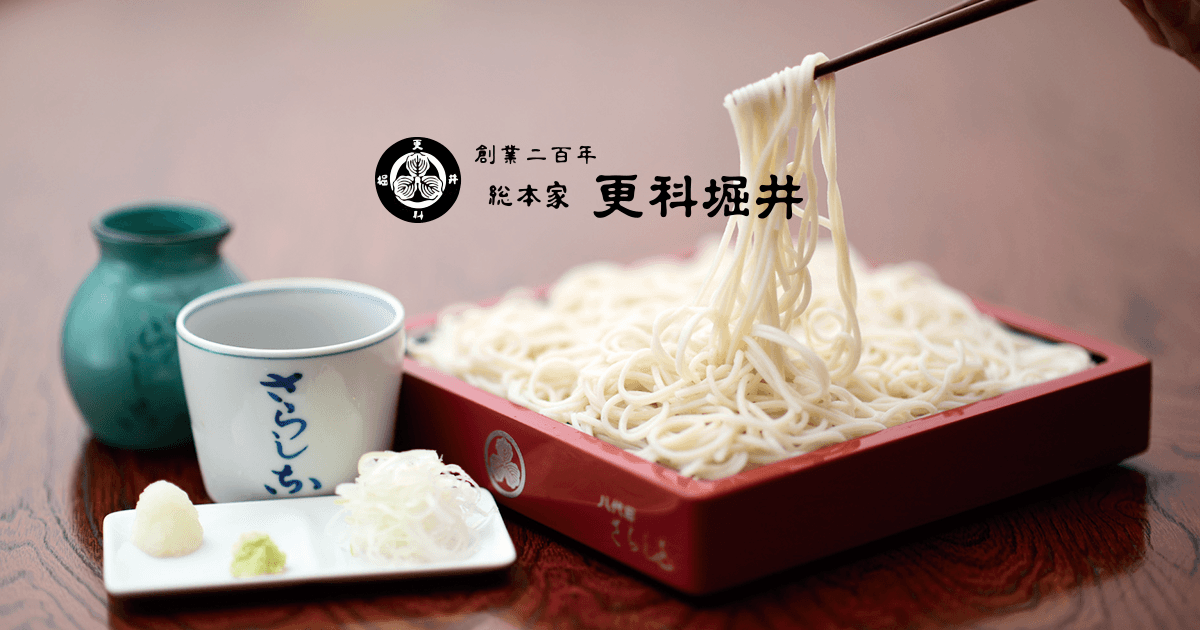
Sarashina Horii's Moto-Azabu flagship is where sarashina soba — the pale, almost porcelain-white noodle now imitated across Tokyo — was born, and the Horii family has been perfecting it since 1789. The recipe uses only the starchy core of the buckwheat kernel, milled and worked into strands so smooth they hold barely any bite, a texture prized enough that earlier generations of Horii were once called on to serve the shogun and visiting daimyo. Eight generations later, the same technique carries on at this Edo-rooted honten, a short walk from Azabu-Juban Station.
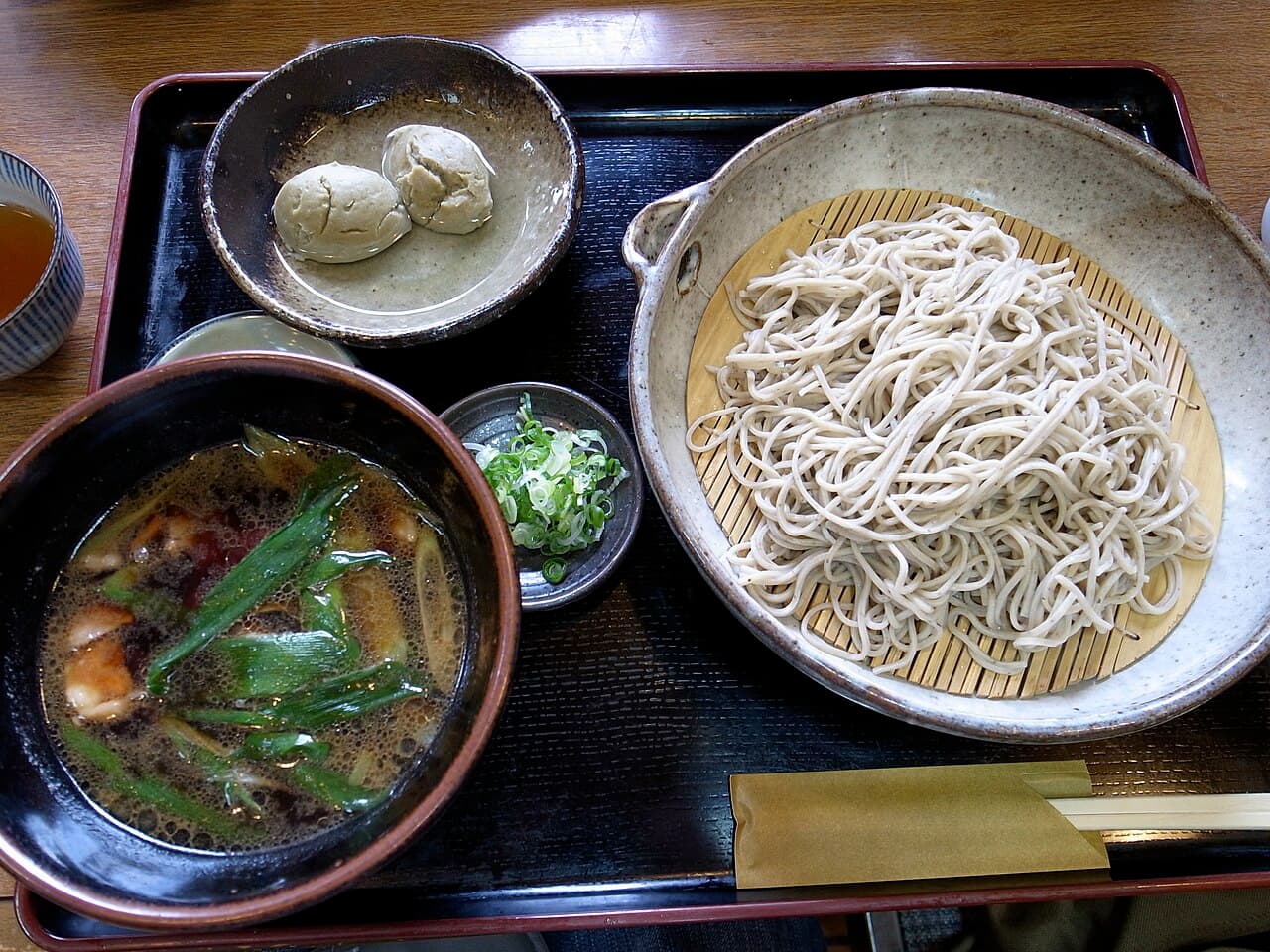
Order the classic seiro and the noodles arrive with two dipping sauces side by side — a lighter, more delicate tsuyu built to let the sarashina's subtlety come through, and a darker, more assertive kaeshi for contrast. Beyond the basics, the kitchen turns out kamo seiro (cold soba with grilled duck), natto soba, and a rotating seasonal noodle that might carry sakura shrimp, yuzu, or shiso depending on the month. Vegetable tempura is on the menu Monday through Saturday.
One nuance worth knowing if you eat vegetarian or vegan: the everyday tsuyu, like most soba dipping sauce in Tokyo, is built on bonito dashi. Since October 2023, though, Sarashina Horii has run a rotating monthly vegan menu using a plant-based dashi substitute, MIRA-Dashi, developed specifically so the kitchen could serve a genuinely animal-free version of its Edo-style soba rather than a compromise — worth calling ahead to check whether it's running the month you visit.
Reservations are accepted for weekday seatings only; weekends run first-come, first-served, and a line often forms before the doors open. English, Chinese, and Korean menus are available, and both cash and major credit cards are accepted.
✓ Last verified Jul 2026
Hours and details can change — please confirm before you visit.
A Michelin-starred soba sanctuary where the chef grows and hand-mills his own Ibaraki buckwheat into pure 100% juwari noodles — the closest a coeliac traveller comes to trustworthy Tokyo soba.
The towering wooden-beamed izakaya that inspired Kill Bill's House of Blue Leaves, where lantern light conjures an Edo-era warehouse over plates of fresh soba and charcoal skewers.
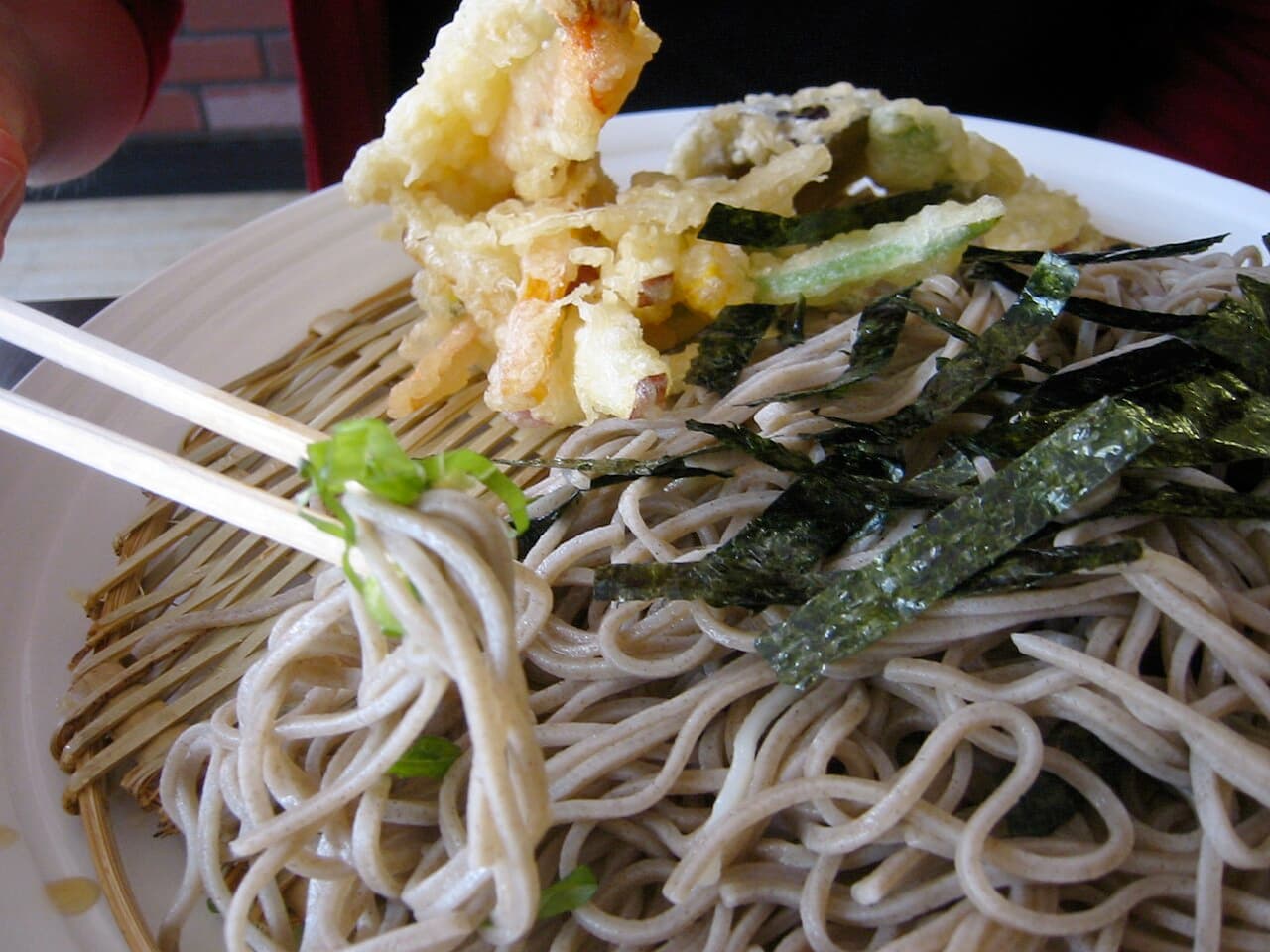
★ Mori soba (cold buckwheat noodles) and tempura soba
Founded in 1884 and housed in a Tokyo-designated historic wooden building, this Kanda institution serves hand-cut soba in a bustling, time-worn dining hall.
★ Chilled seiro soba with a robust, strongly seasoned Edo dipping broth
A buckwheat institution founded in 1880 and regarded as the head house of Edo's 'Yabu' soba lineage, known for fragrant chilled seiro and a strongly seasoned dipping broth. The current wooden building reopened in 2014 on the same Awajicho site after a fire.
★ Vegan tempura soba and zaru soba with a plant-based broth
A small standing-style soba shop in Shimokitazawa (opened 2024) serving ni-hachi soba with a fully plant-based kombu broth and toppings, so there is no bonito or fish dashi. The noodles are ni-hachi (80% buckwheat, 20% wheat), so it is vegan but not gluten-free; it is daytime-only and closed early in the week, so check hours before visiting.
★ A layered clam-and-porcini shio soba blending Japanese dashi with truffle and European aromatics
Famed for its clam-and-truffle shio soba, this Shinjuku Gyoen shop held a Michelin one star in 2022-2023 and currently carries a Michelin Bib Gourmand; it runs a numbered-ticket system, so arrive early.
★ 'Eel' sushi and namasu crafted entirely from tofu and burdock
A reservation-only tatami refuge where a chef who trained 25 years at Takayama's Kakusho turns the seasons into meat-free trompe-l'oeil — tofu that tastes like eel, burdock that becomes sushi.