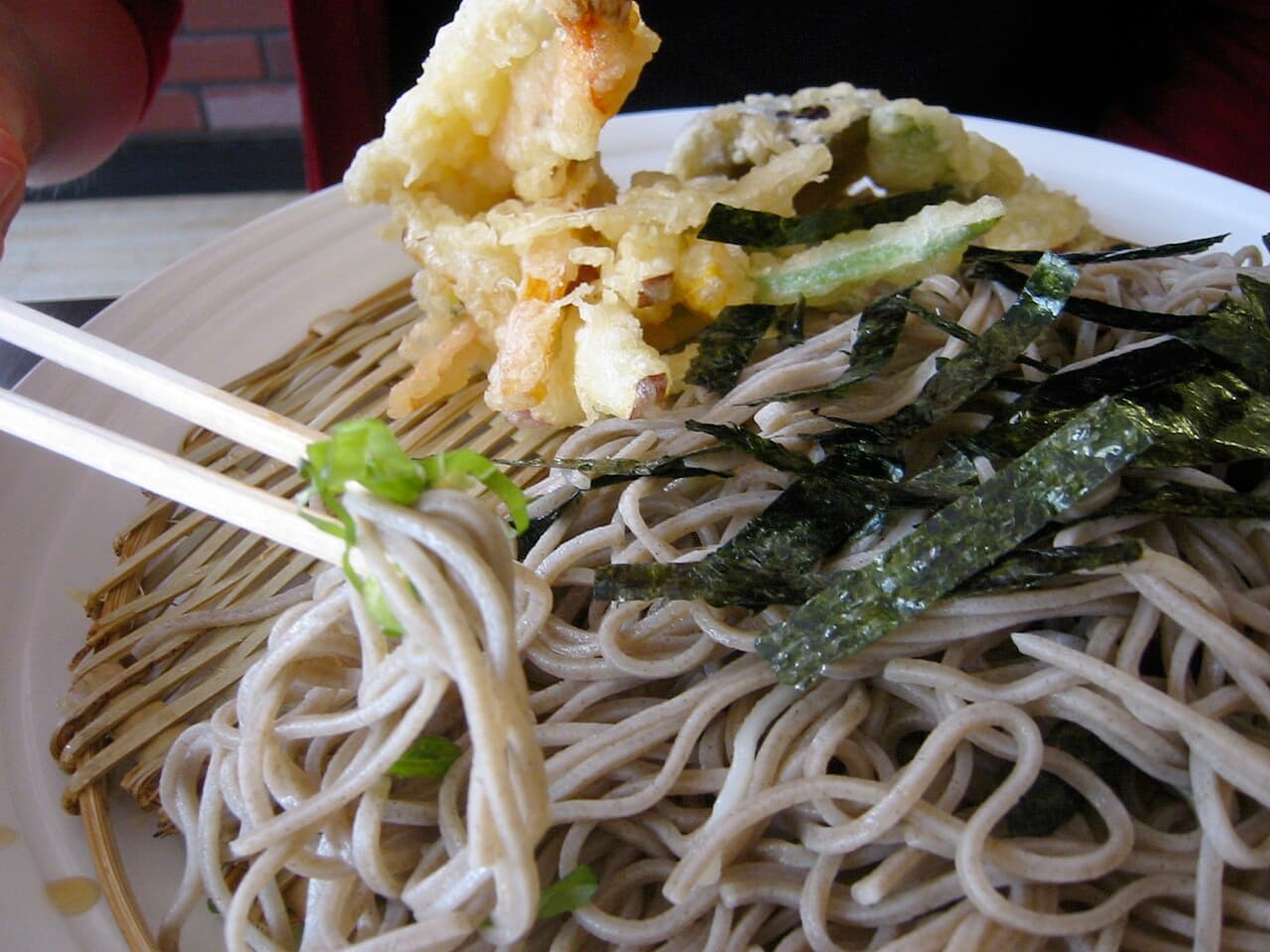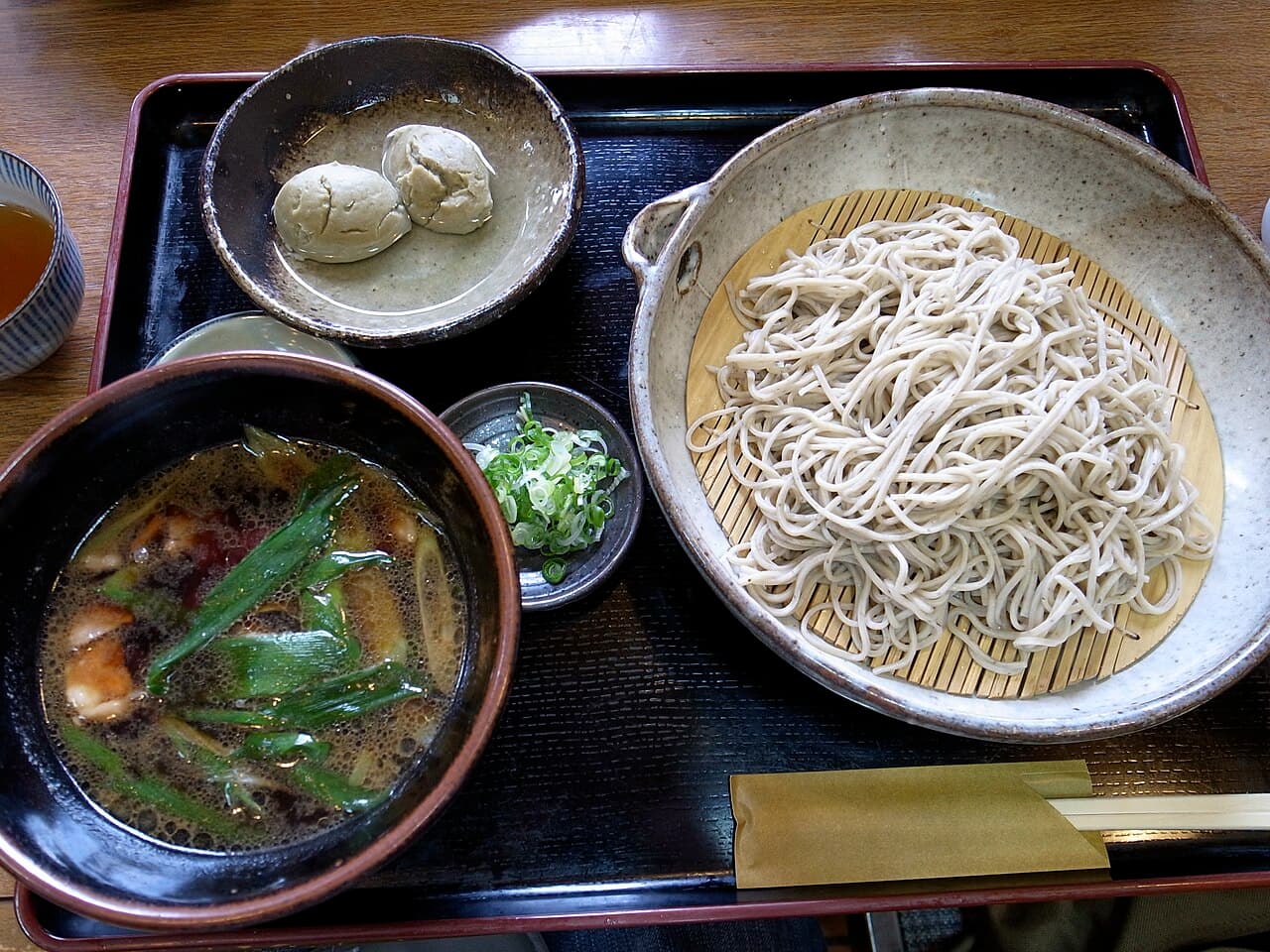
Founded in 1884 and housed in a Tokyo-designated historic wooden building, this Kanda institution serves hand-cut soba in a bustling, time-worn dining hall.

Can I eat here?

We haven’t confirmed specific diets here yet — use the phrasebook to show staff what you can and can’t eat.

Phrasebook

Reserve & verify

Details

Address
1-13 Kanda Sudacho, Chiyoda-ku, Tokyo 101-0041
Nearest station
Awajicho Stn, 2 min
Cuisine
Soba (handmade buckwheat noodles)
Price
¥
Signature
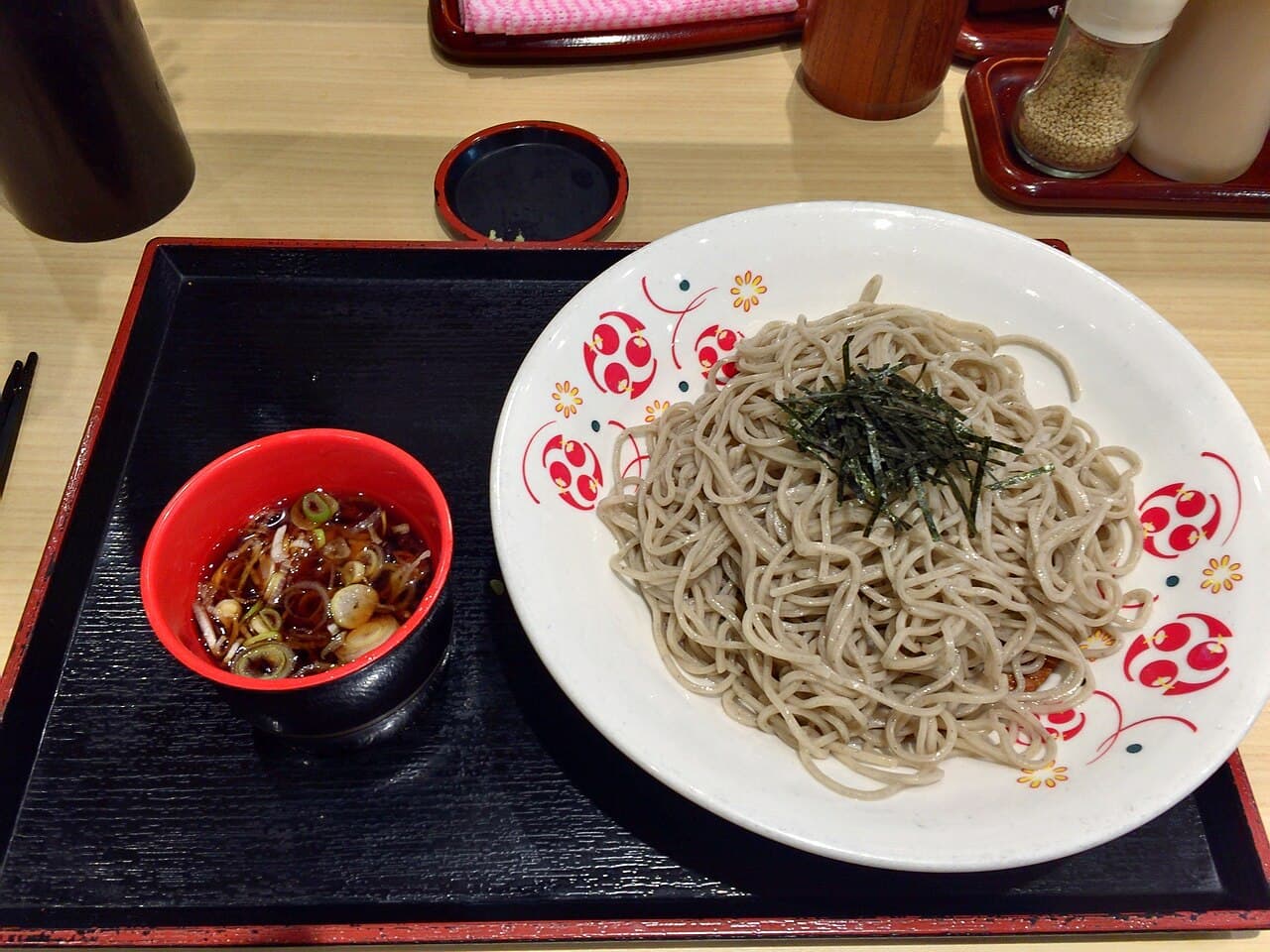
Mori soba (cold buckwheat noodles) and tempura soba

Kanda Matsuya has served hand-cut soba from this same Kanda corner since 1884, and the building it sits in is almost as storied as the noodles. The current two-story wooden structure went up in 1927, in the rebuilding that followed the 1923 Great Kanto Earthquake, and it survived the wartime air raids that leveled much of the surrounding blocks. Above the two street-facing entrances, the window lattice is carved into pine (matsu) and arrow-feather (ya) shapes — a quiet visual pun on the shop's name that most first-time visitors walk past without noticing. Tokyo has designated it a historic building and Chiyoda Ward lists it as a landscape property, but inside it still runs as a working noodle shop, not a museum piece: worn wooden tables, bamboo-woven walls, and a lunchtime room that fills with office workers, solo diners, and elderly regulars shoulder to shoulder.

The kitchen switched from machine-cut to fully hand-cut noodles sometime in the late 1950s or 1960s and never went back; the second and third generations of owners each trained elsewhere first — including at nearby Kanda Yabu Soba — before bringing the technique home. Order the mori soba plain if you want to taste the buckwheat on its own, or add tempura for the classic pairing; in colder months, the nameko soba — a hot bowl piled with glossy mushrooms in the same dashi — and kamo seiro, cold noodles dipped in a duck-fat-enriched broth, are both worth seeking out. The novelist Shotaro Ikenami — better known for his Edo-era historical fiction but also an occasional food essayist — was a regular here and once wrote that everything on the menu was good; the unhurried, egalitarian mood he described is still recognizable today.

A few practical notes: it's cash only, doesn't take reservations, and the lunch rush is real, so aim for after 1pm on weekdays if you'd rather not queue. Closed Sundays and Mondays. There's no English menu, but the dish names are simple enough to point to, and tempura soba is a safe, satisfying order for a first visit.

Last verified Jul 2026

Hours and details can change — please confirm before you visit.
UMAMI HUNT Editorial
  • Japan-based editorial team
  • Primary sources, cited
  • Variable facts dated

The UMAMI HUNT editorial desk. We work from primary sources and date every claim that can change.

More like this

Shinjuku · Udon (handmade) · ¥

Udon Shin

Made-to-order udon, incl. cult carbonara udon & tempura

A perpetually-queued Tabelog Top-100 udon shop near Shinjuku where every bowl of springy noodles is cut and boiled to order — try the cult carbonara udon.

Last verified Jul 2026
  • Solo
  • Casual

Azabu-Juban · Soba (sarashina) · ¥¥

Sarashina Horii

Sarashina soba — pure-white refined buckwheat noodles

A 230-year-old Edo institution and the birthplace of silky, pure-white sarashina soba, served with a choice of light and dark dipping broths.

  • Vegetarian
  • Vegan
Last verified Jul 2026
  • Solo
  • Casual

Jingumae · Handmade juwari soba (100% buckwheat) · ¥¥¥

Tamawarai

Juwari (100% buckwheat) soba, stone-milled in-house daily

A Michelin-starred soba sanctuary where the chef grows and hand-mills his own Ibaraki buckwheat into pure 100% juwari noodles — the closest a coeliac traveller comes to trustworthy Tokyo soba.

  • Gluten-free
  • Vegetarian
Last verified Jul 2026
  • Solo
  • Date

Nishiazabu · Izakaya (soba, yakitori, tempura) · ¥¥¥

Gonpachi Nishiazabu

Daily stone-milled handmade soba, charcoal skewers, tempura

The towering wooden-beamed izakaya that inspired Kill Bill's House of Blue Leaves, where lantern light conjures an Edo-era warehouse over plates of fresh soba and charcoal skewers.

  • Vegan
  • Halal
Last verified Jul 2026
  • Date
  • Business

Shimokitazawa · Vegan soba (standing) · ¥

Vegan Soba Tokyo Ayler

Vegan tempura soba and zaru soba with a plant-based broth

A small standing-style soba shop in Shimokitazawa (opened 2024) serving ni-hachi soba with a fully plant-based kombu broth and toppings, so there is no bonito or fish dashi. The noodles are ni-hachi (80% buckwheat, 20% wheat), so it is vegan but not gluten-free; it is daytime-only and closed early in the week, so check hours before visiting.

  • Vegan
  • Vegetarian
  • Dairy-free
Last verified Jul 2026
  • Casual
  • Solo

Shinjuku · Ramen (shio / shoyu soba) · ¥

Soba House Konjiki Hototogisu (Shinjuku Gyoen)

A layered clam-and-porcini shio soba blending Japanese dashi with truffle and European aromatics

Famed for its clam-and-truffle shio soba, this Shinjuku Gyoen shop held a Michelin one star in 2022-2023 and currently carries a Michelin Bib Gourmand; it runs a numbered-ticket system, so arrive early.

Last verified Jul 2026
  • Solo
  • Casual

More in Kanda

Kanda · Soba (Edo-style) · ¥¥

Kanda Yabu Soba

Chilled seiro soba with a robust, strongly seasoned Edo dipping broth

A buckwheat institution founded in 1880 and regarded as the head house of Edo's 'Yabu' soba lineage, known for fragrant chilled seiro and a strongly seasoned dipping broth. The current wooden building reopened in 2014 on the same Awajicho site after a fire.

Last verified Jul 2026
  • Casual
  • Solo
  • Business