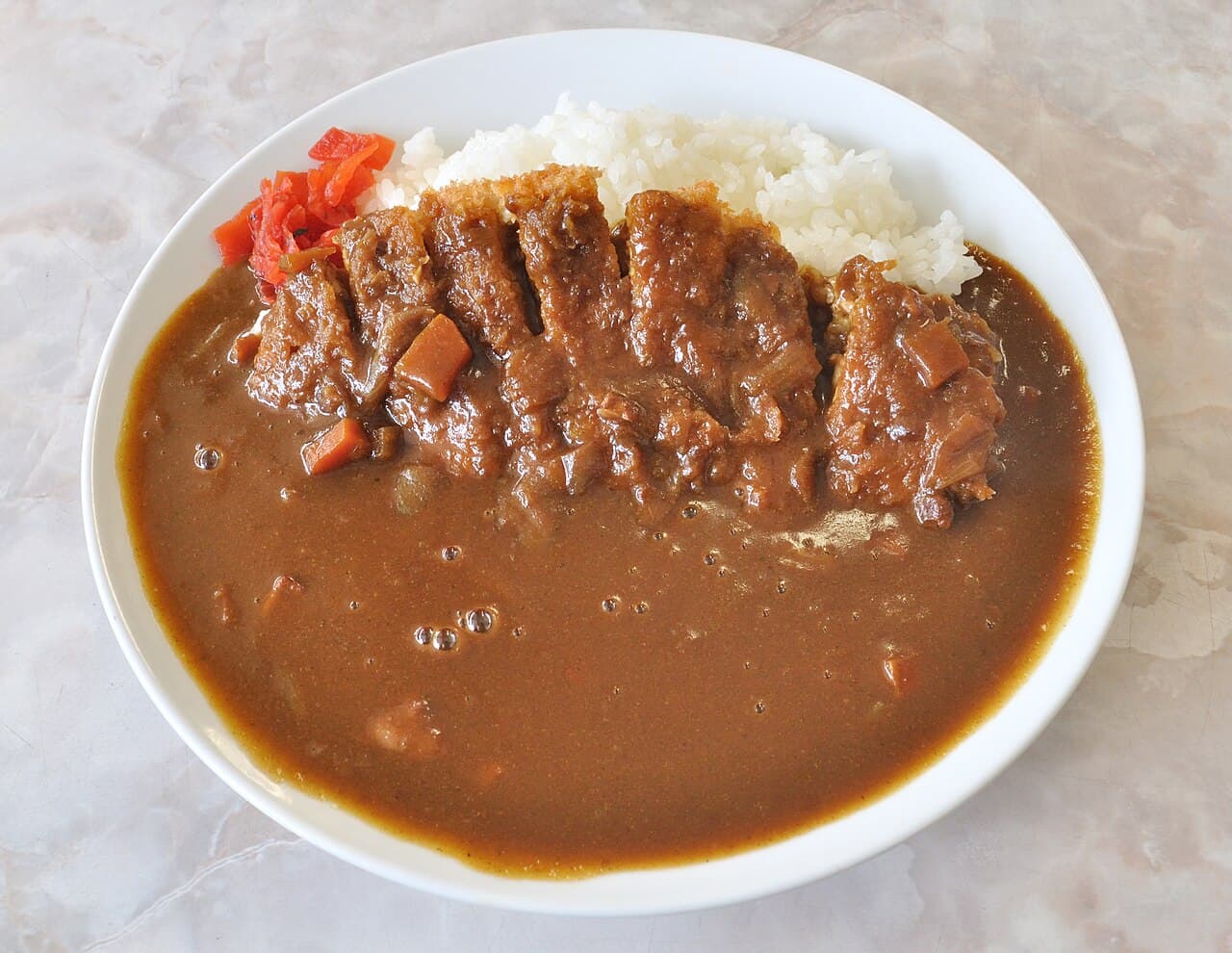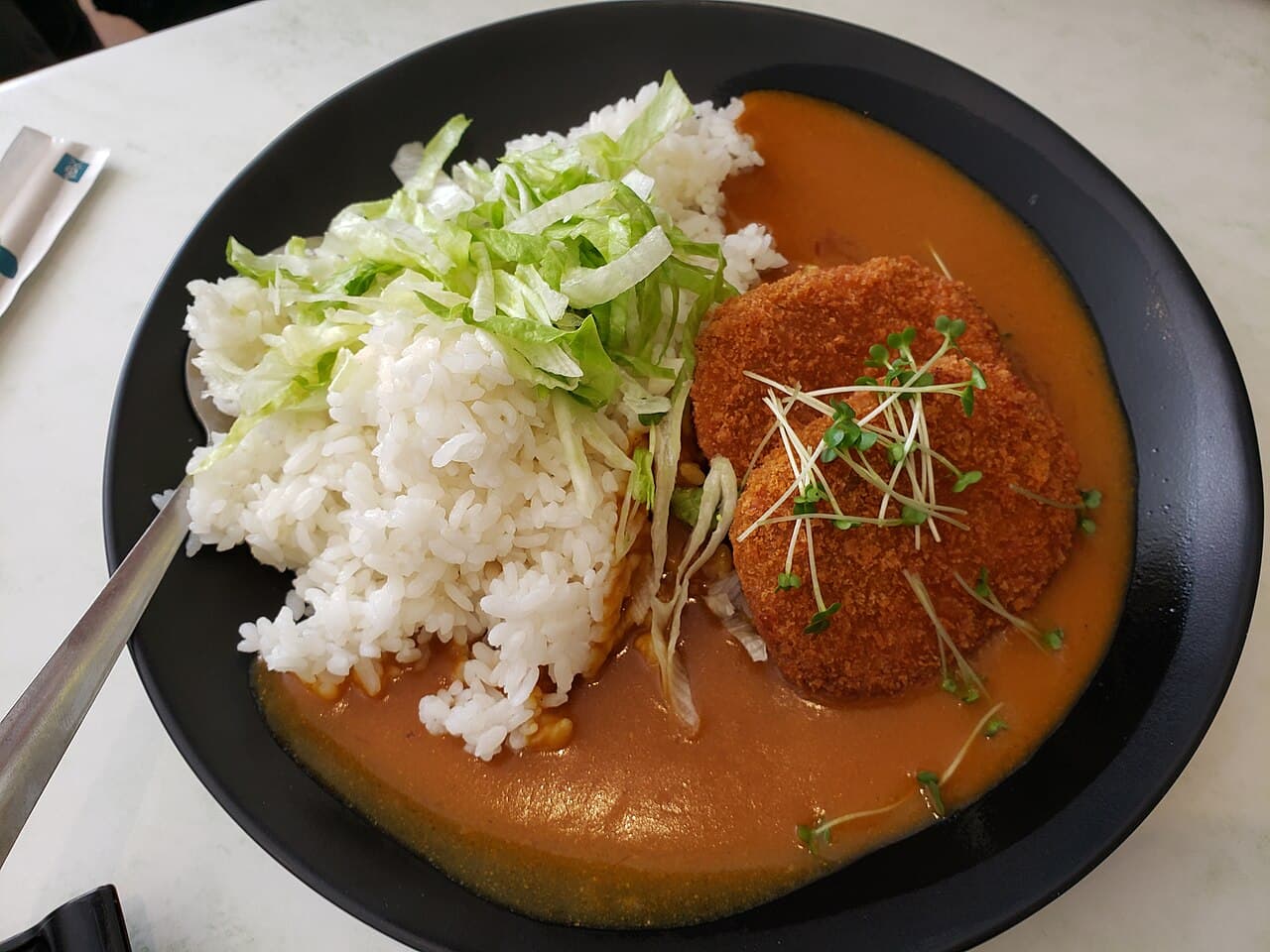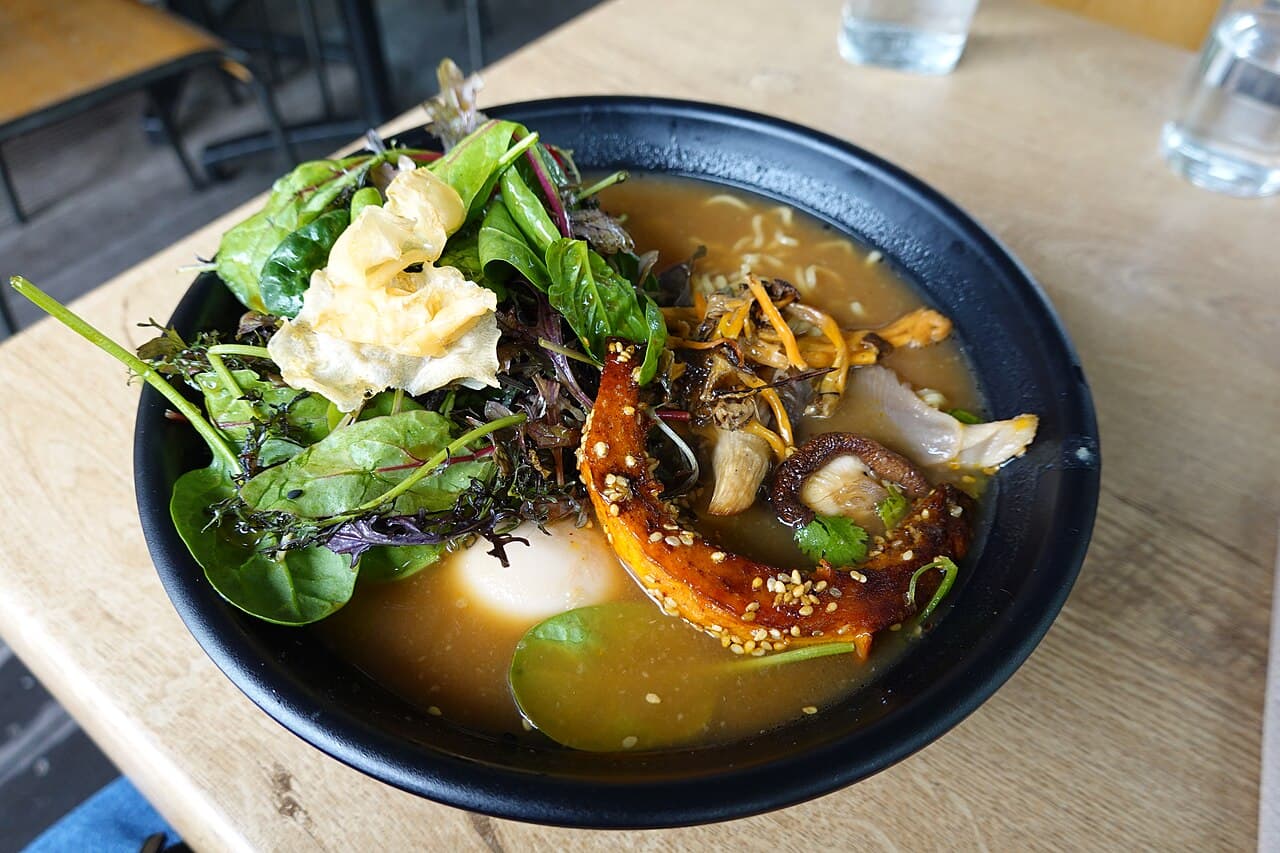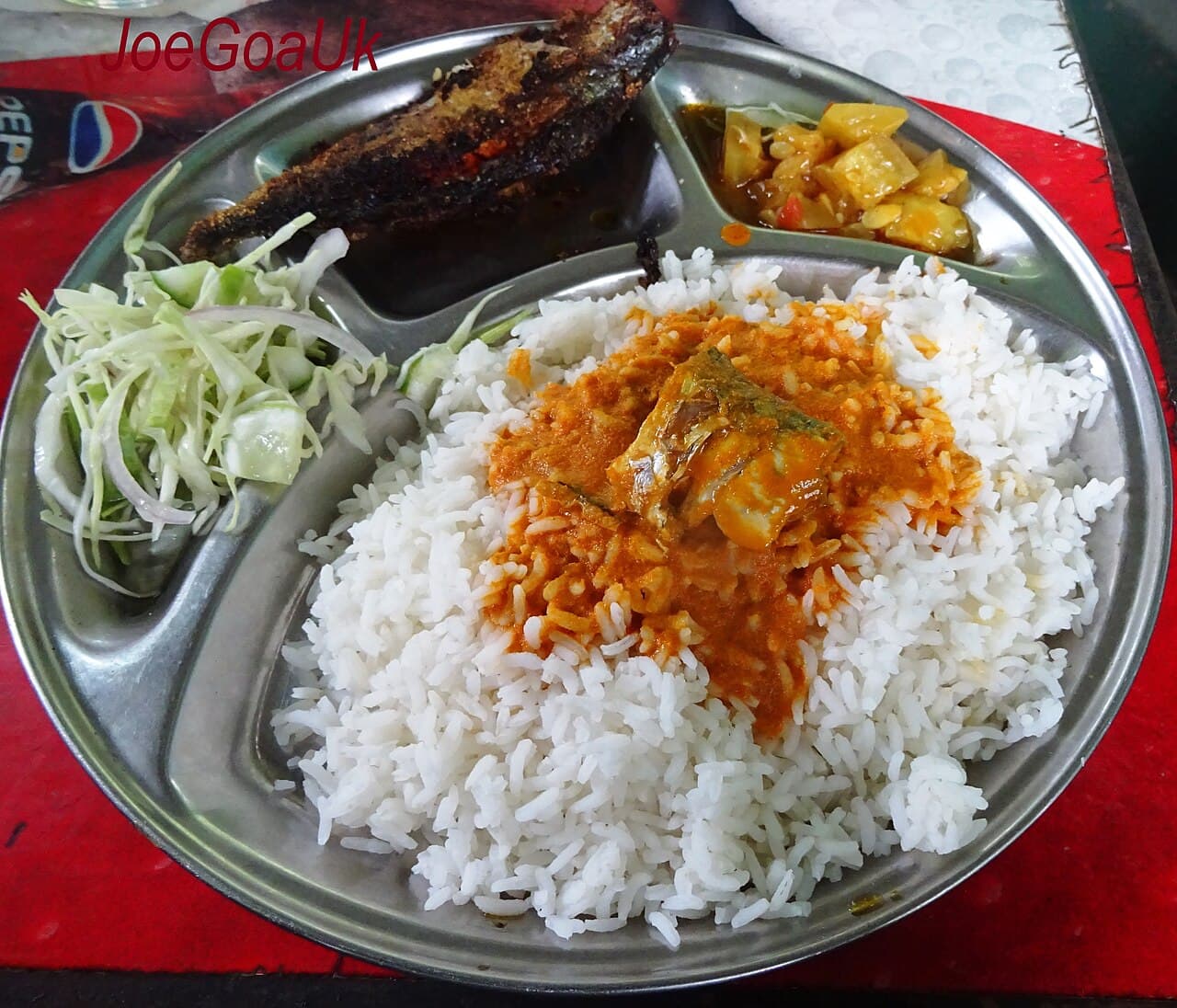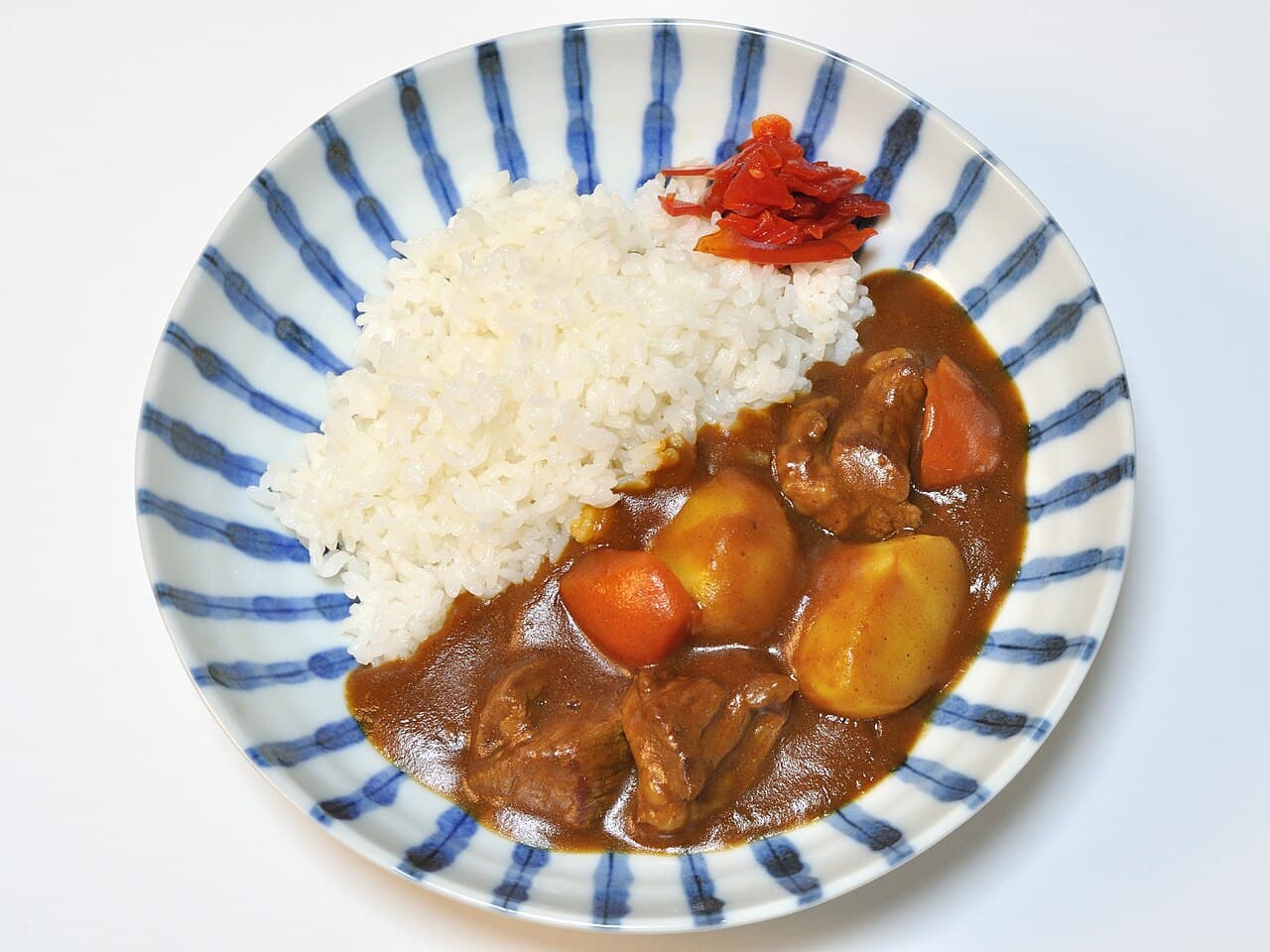
A thick, mildly spiced curry sauce served over rice — Japan's own comfort-food curry, eaten from homes to specialist shops.
What it is
Japanese curry (karē raisu) is a thick, mildly sweet curry sauce served over rice — with beef, chicken, pork or vegetables, and at its most indulgent topped with a breaded cutlet (katsu curry). Milder and rounder than its Indian ancestor, it's a true national staple.
What makes it special
Curry arrived via the British navy in the Meiji era and was thoroughly localized — thickened into a roux, gently sweetened, and adopted by school lunches and home kitchens alike. Today it spans slow-simmered European-style curry houses, katsu-curry counters, halal specialists and chains where every element of the plate is yours to customize.
How to eat it (and the manners)
Curry rice is eaten with a spoon — no chopstick etiquette to worry about. At the big chain CoCo Ichibanya you build your own plate: rice amount (150–400 g in 50 g steps), spice from mild (amakuchi) up to level 10, then toppings (as of July 2026). The red pickles on the table (fukujinzuke) are a free palate-refresher — spoon them right onto the plate.
Where to eat it
Tokyo's classics cover every mood: slow-simmered European-style beef curry at Bondy in Jimbocho, the famous katsu curry of Ginza Swiss, and halal-certified Japanese curry at Yoshi's Passion in Asakusa.
What to order
- Katsu curry (with a cutlet)
- Beef or vegetable curry
- Choose your spice level
- Halal & wagyu options in Tokyo
For special diets
Roux often contains wheat and sometimes dairy/meat. Halal and vegan curries exist — see our picks.
FAQ
- What is Japanese curry?
- A thick, mildly spiced curry sauce served over rice — Japan's own comfort-food curry, eaten from homes to specialist shops.
- Is Japanese curry vegetarian, vegan, halal or gluten-free?
- Roux often contains wheat and sometimes dairy/meat. Halal and vegan curries exist — see our picks.
- Is katsu curry Japanese?
- Yes. Katsu curry is a Japanese dish — Japanese curry sauce over rice, topped with a breaded cutlet. Curry reached Japan via the British navy in the Meiji era and was localized into a thick, mildly sweet roux; pairing it with a katsu cutlet is Japan's own invention.
- How do you order at a Japanese curry chain?
- At CoCo Ichibanya you choose a base curry, rice amount (150–400 g in 50 g steps), spice level from mild up to 10, then toppings (as of July 2026). Ordering level 10 requires having finished level 5 before.
Recipes and preparation vary by restaurant, so this is a general guide. If you're ever unsure, please confirm directly with the venue before you order — they'll appreciate the heads-up.