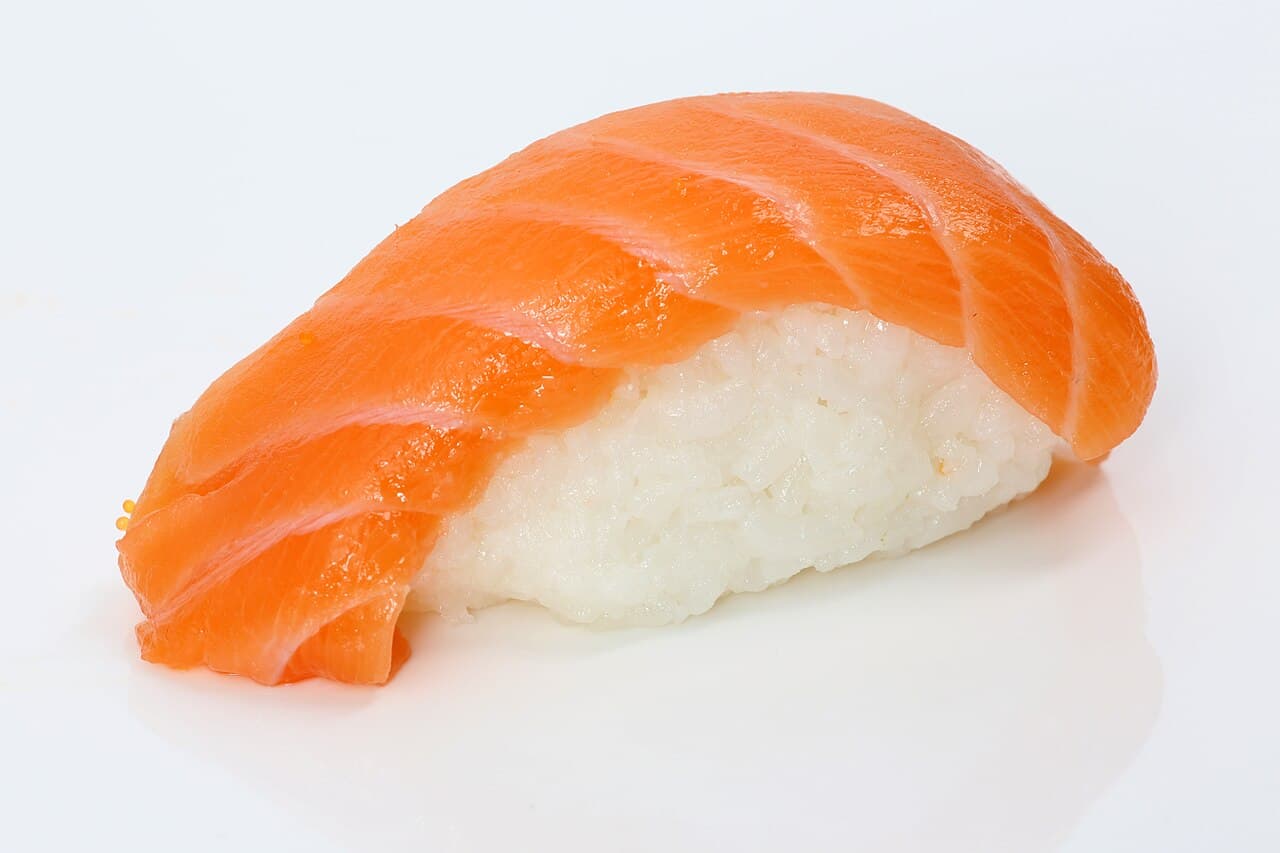
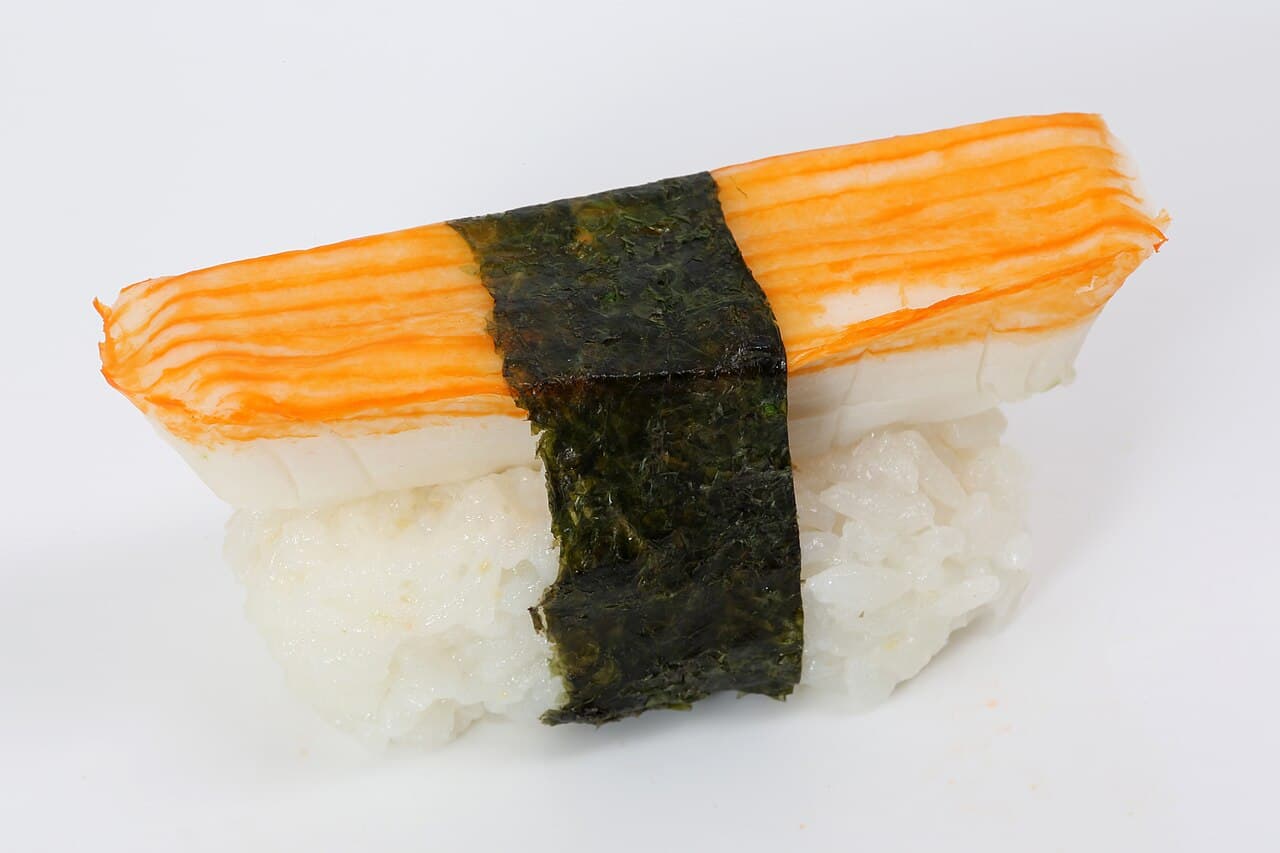
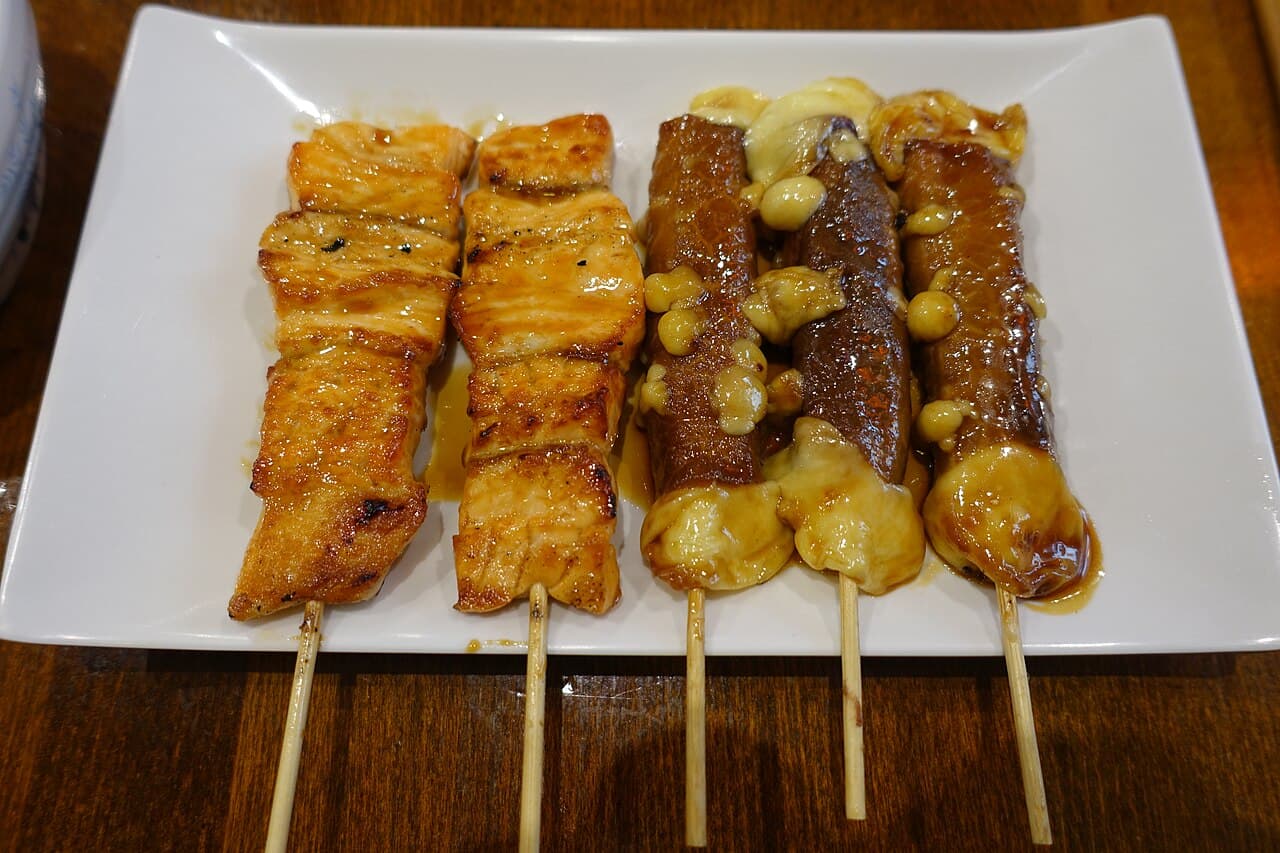
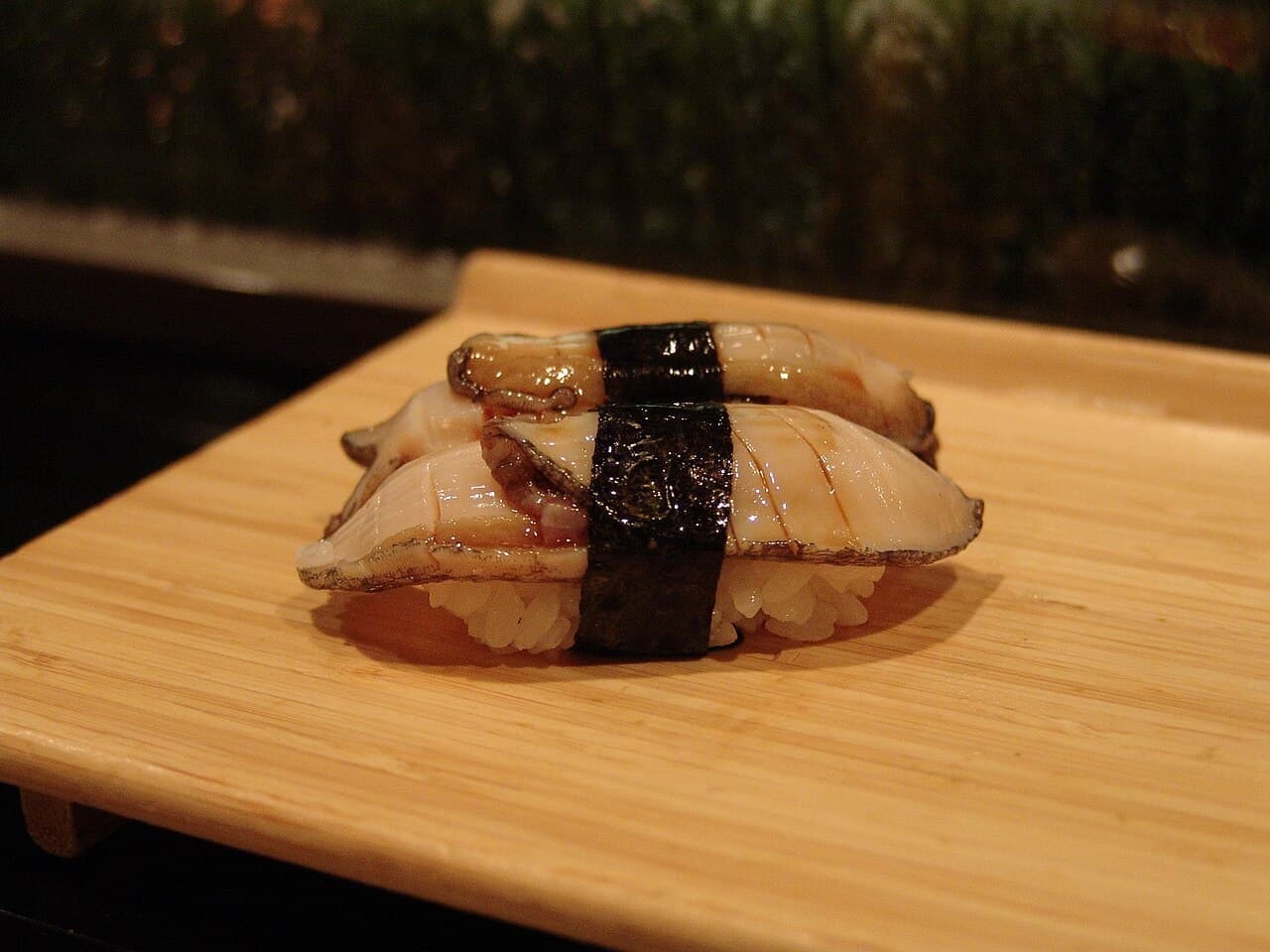
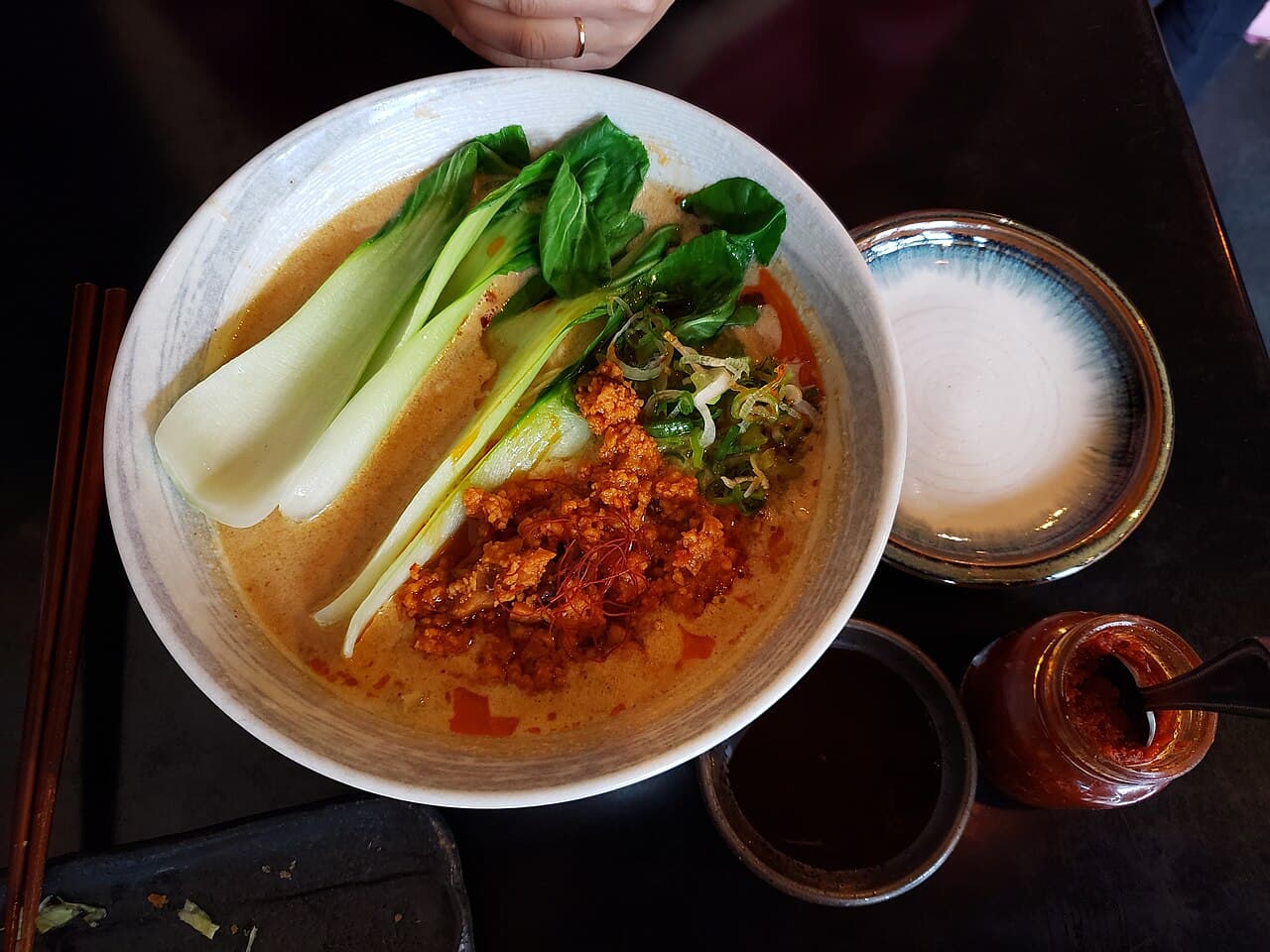
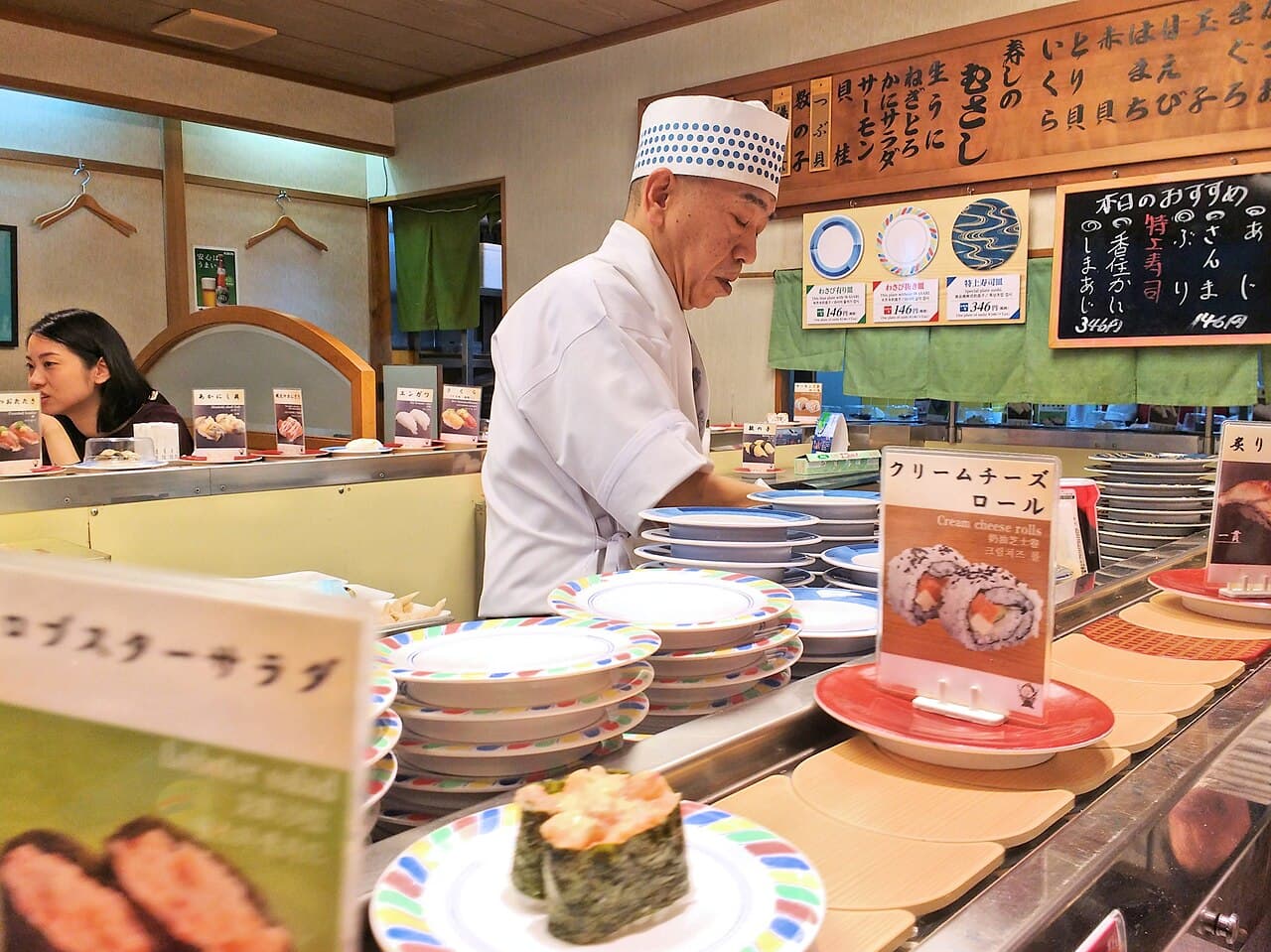
A famous Toyosu Market sushi counter (relocated from old Tsukiji) serving a chef's-selection omakase noted for its premium tuna. Pure seafood-and-rice sushi makes it naturally pescatarian; early market hours and not gluten-free (soy sauce contains wheat).
Can I eat here?
✓ Diets our editors confirmed in person
🐟
Show this to staff
Pescatarian
肉と鶏肉は食べませんが、魚介は大丈夫です。
Niku to toriniku wa tabemasen ga, gyokai wa daijōbu desu.
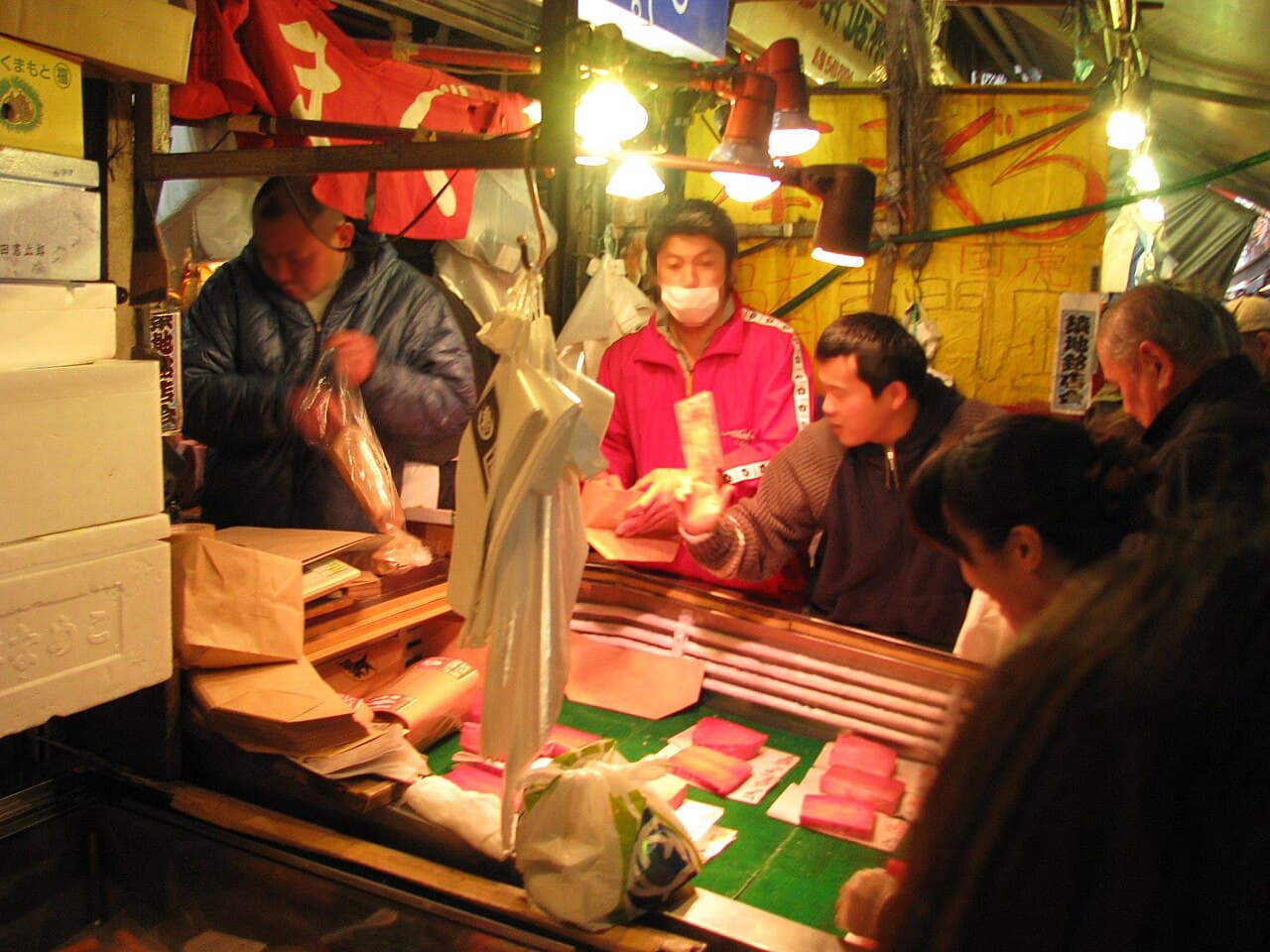
Daiwa Sushi is the faster-moving of Toyosu Market's two famous sushi counters, a 26-seat bar inside the market's produce building where the nigiri is built from that morning's tuna auction.
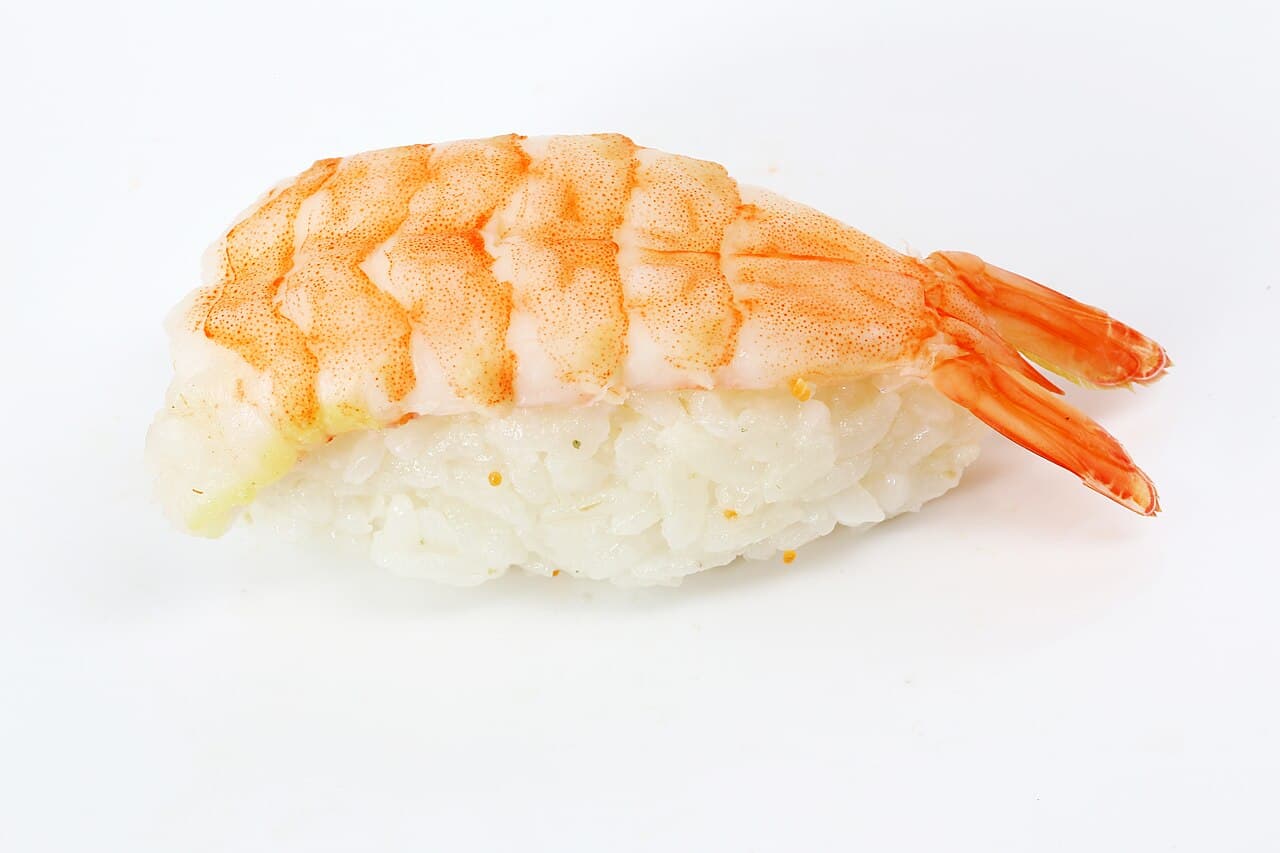
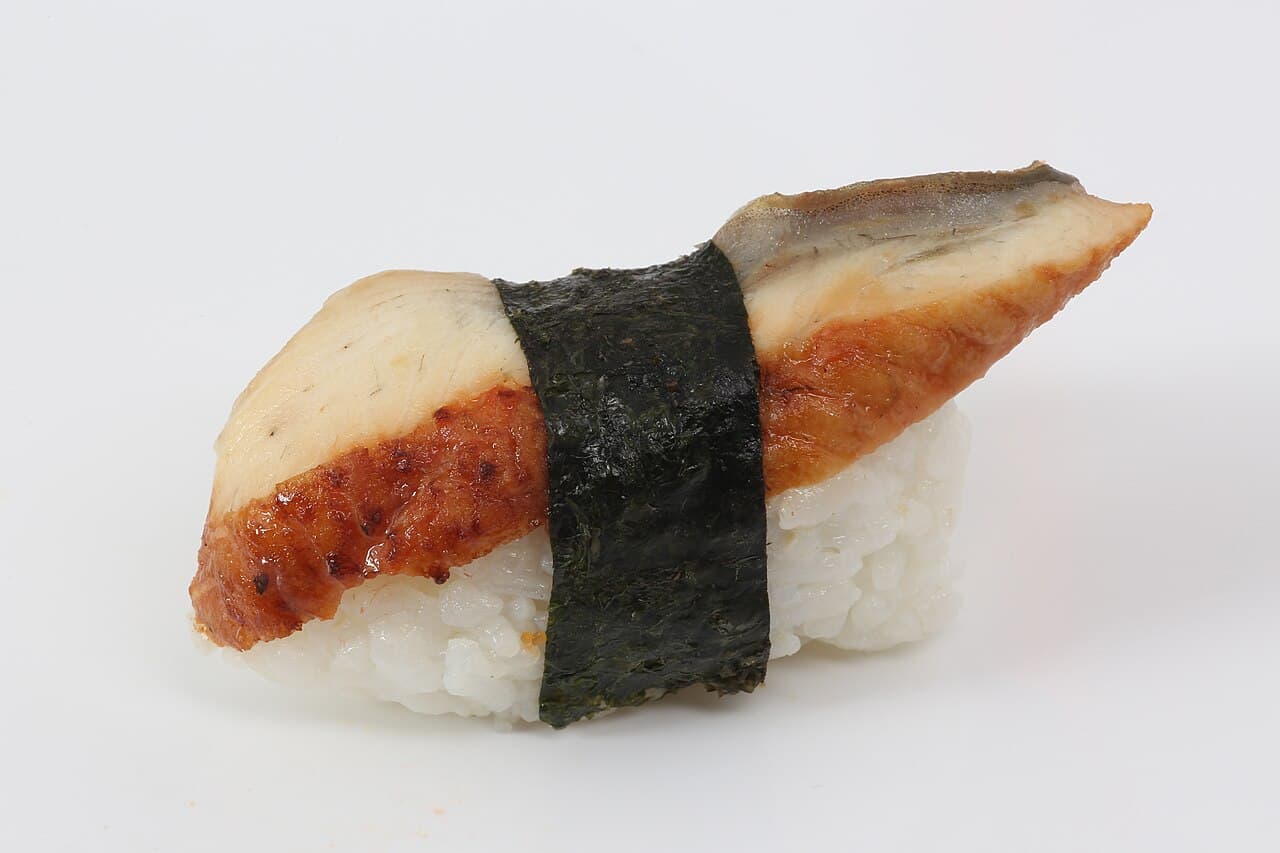
The omakase set — seven pieces of nigiri, a hand-rolled gunkan, tamago, and a bowl of miso soup for roughly ¥6,000–8,000 — is built around whatever came in that day, and the run of toro is the reason people queue before dawn; recent visits have turned up fatty cuts from as far as Shiogama in Miyagi, cut in front of you rather than pre-plated. What sets it apart from its more famous neighbor, Sushi Dai, is pace: Daiwa seats roughly twice as many diners and moves them through in fifteen to thirty minutes rather than the hour Sushi Dai is known for, so even though both draw the same market crowd, the line here tends to shrink faster. Seats are separated by short curtain partitions — a small, practical touch that keeps the counter feeling private despite the volume of people passing through.
A few things worth knowing before you go: it's open Monday through Saturday, 6:00am–1:00pm, and closed Sundays and market holidays, with no phone reservations — you either queue on arrival (before 6am if you want to skip the worst of it) or book one of the narrow online slots via TableCheck, which only takes parties of one or two. Credit cards, IC cards, and PayPay are all accepted at the counter. There's no English menu, though the omakase format means there's not much to read anyway — the chef decides, you eat. It's pure fish-and-rice sushi, so it's naturally pescatarian, but not vegetarian-adaptable, and the soy sauce on the counter contains wheat, so it isn't a safe stop for strictly gluten-free travelers.
✓ Last verified Jul 2026
Hours and details can change — please confirm before you visit.
★ Edomae nigiri course — soy sauce to fish, all halal-certified
Japan's first halal-certified sushi house, steps from Senso-ji, serving full Edomae nigiri — soy, fish and pickles all halal — with a second-floor prayer room built with the local mosque.
★ Kakinoha-zushi — cured mackerel and salmon pressed onto vinegared rice and wrapped in a persimmon leaf
The Naramachi dining branch of Hiraso, a kakinoha-zushi house founded in Yoshino in 1861, where Nara's landlocked specialty — mackerel or salmon cured and pressed onto vinegared rice, then wrapped in a fragrant persimmon leaf — is served as a sit-down meal a short walk from Sarusawa Pond. Because the toppings are fish, it suits pescatarians but not vegetarians or vegans; the rice is seasoned with vinegar and ordinary soy accompanies it, so it is not gluten-free. Closed Mondays.
★ An omakase course built around premium heritage chickens grilled over charcoal
A charcoal-yakitori specialist near Ueno-Hirokoji ranked on Tabelog's Top-100 yakitori list for several years (Yakitori East 2023-2025), serving an omakase course built around premium heritage chickens such as Kagoshima black Satsuma. Reservation-focused and at the higher price tier.
★ Plant-based nigiri and sushi sets using vegetable alternatives to fish
A sit-down plant-based sushi restaurant in Shoto (near Shibuya) where every piece is made without seafood or animal products, so there is no fish dashi to worry about. It is not gluten-free (soy sauce and some components contain wheat); reservations are recommended and the venue opened its permanent location in late 2025.