
Dietary guide
Is Sushi Halal in Japan? What to Watch For (and How to Order Safely)
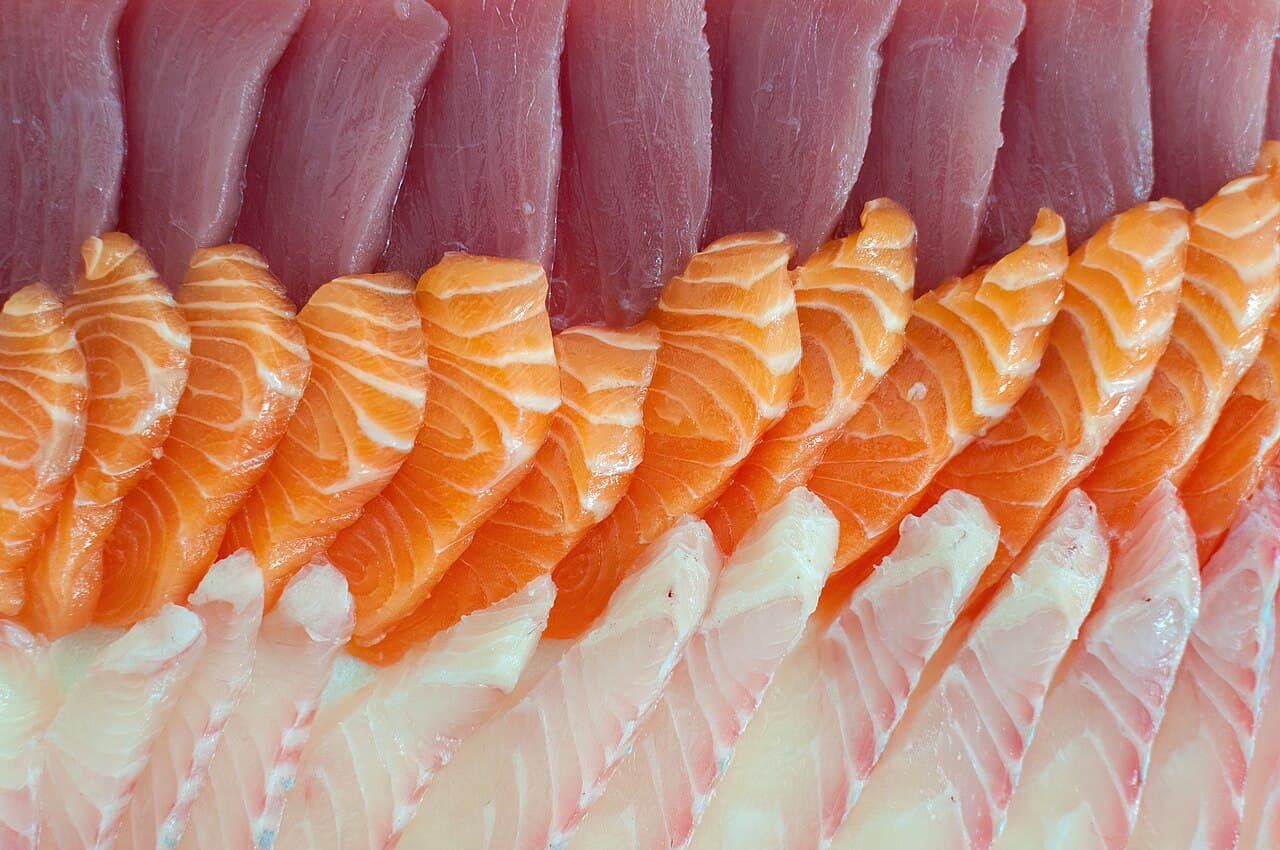
© Wilfredor / CC BY-SA 4.0, via Wikimedia Commons · CC BY-SA 4.0
Sushi in Japan can be halal-friendly, but most of it is not halal-certified. The core — raw fish and rice — is permissible in Islam: fish is halal across all major schools of thought, and no special slaughter is required for it. The problem is what gets added: alcohol slips in through the rice seasoning, the soy sauce, and several popular toppings, and at a normal counter the same knife and brush touch every order. If you know exactly what to check, you can eat sushi safely almost anywhere in Japan.
The short answer
Plain fish on rice sounds simple, but a typical restaurant meal touches alcohol in at least three places, and the shared counter adds a fourth risk. None of them are obvious from the plate, which is why so many Muslim travelers are unsure. The good news: each one has a clear workaround, and Tokyo now has genuinely halal-certified sushi.
The three things to watch
1. Mirin and cooking sake in the rice and glaze. Traditional sushi rice (shari) is seasoned with rice vinegar, sugar and salt — all fine. But many shops add a splash of mirin or cooking sake for depth. Hon-mirin is about 14% alcohol by volume and is treated as khamr (an intoxicant) by strict halal authorities, so it is best avoided. The brushed soy glaze on nigiri, called nikiri, is also usually simmered with mirin and sake.
2. Soy sauce contains alcohol. Regular Japanese soy sauce (koikuchi shoyu) contains roughly 2–3% alcohol as a natural product of fermentation — several times higher than the 0.5% many scholars treat as a limit. This is why standard soy sauce is a real concern, not a technicality. Halal-certified soy sauce (Kikkoman makes one, produced to suppress alcohol during fermentation) solves it.
3. Cooked and processed toppings. These are where hidden ingredients hide:
| Topping | Halal concern (as of 2026) |
|---|---|
| Raw fish (tuna, salmon, yellowtail) | Generally fine — the flesh itself is halal in all schools |
| Shrimp, squid, scallop, sea urchin | Fine in most schools; disputed (makruh) in the Hanafi school — see below |
| Tamago (sweet egg) | Often made with mirin |
| Unagi / anago (eel) | Sweet sauce usually has mirin and sake |
| Imitation crab (surimi) | Fish-based, but additives may include alcohol flavoring |
| California roll, spicy mayo | Mayo/sauces may contain alcohol vinegar or non-halal additives |
A note on which seafood counts
Fish is halal in every major school of Islamic law, so tuna, salmon, yellowtail and other finned fish are not in dispute. Non-fish seafood is where the schools differ. In the Hanafi madhhab, many scholars consider shrimp, squid, octopus, shellfish and sea urchin makruh (disliked) or disputed, because classical Hanafi jurisprudence limits permissible seafood to true fish. The Shafi'i, Maliki and Hanbali schools are broadly more permissive and allow most sea creatures. If you follow the Hanafi position strictly, the simplest path is to keep your order to finned fish and treat the other sea creatures as a personal judgment call.
How to order halal-conscious sushi
You do not need a certified restaurant to eat carefully. At a normal sushi bar:
- Choose raw nigiri and sashimi — tuna (maguro), salmon (sake), and, if your school permits them, shrimp (ebi), squid (ika) and scallop (hotate). Ask them to serve it without the nikiri glaze.
- Bring your own halal soy sauce in a small bottle, or ask for salt and lemon instead.
- Skip tamago, eel, imitation-crab rolls and anything with a sweet brown sauce.
- Ask about the rice. Some shops season shari with only vinegar, sugar and salt; others add mirin. A quick question settles it.
Watch for shared prep, too. Even a perfectly permissible piece of fish can pick up traces of what came before it. At a busy counter the chef uses one knife, one nikiri brush and one cutting board across every order, and the little dish of soy sauce in front of you is often refilled from a communal bottle. If eel glaze or a mirin-based sauce was brushed just moments earlier, some of it can transfer to your piece. You cannot police a professional kitchen, but you can lower the risk: ask for freshly wiped tools if that matters to you, decline the pre-poured soy dish and use your own bottle, and choose a quieter time when the chef can prepare your order cleanly. Certified and Muslim-friendly restaurants remove this worry by keeping halal and non-halal utensils separate.
A phrase to show staff:
お寿司のシャリにみりん・お酒は入っていますか?(O-sushi no shari ni mirin / o-sake wa haitte imasu ka?)
"Does the sushi rice contain mirin or cooking alcohol?"
And to decline the glaze:
醤油のタレは付けないでください。(Shoyu no tare wa tsukenaide kudasai.)
"Please don't brush on the soy glaze."
Where to find certified and Muslim-friendly sushi in Tokyo
Tokyo has real options now. Asakusa Sushi Ken is widely cited as the city's first halal-certified sushi restaurant, carefully using halal-certified soy sauce, vinegar and other ingredients with rice prepared to halal-certified standards; its sushi sets start at about ¥1,800, the larger (1.5×) set runs around ¥3,000, and dinner averages roughly ¥3,080 per person (as of 2026). FUJIYAMA TOKYO in Shinjuku offers Muslim-friendly all-you-can-eat sushi and snow crab with halal soy sauce, separated utensils and dedicated courses. Certifications and menus change, so always confirm when you book.
For a fuller, regularly updated list of venues, opening details and how to reserve, see our companion guide to halal sushi restaurants in Tokyo. If mirin is your main worry across all Japanese food, read is mirin halal in Japan for the ingredient-level detail. And to plan the rest of your trip — prayer, other cuisines, convenience-store finds — start with our halal Japan travel guide.
The honest bottom line
Sushi is one of the easier Japanese foods to make halal-conscious, because its base is naturally permissible. The risk is not the fish — it is the seasonings, and, at a busy counter, the shared tools. Stick to raw nigiri without the glaze, control your own soy sauce, and use a certified restaurant when you want to relax completely. Do that, and sushi becomes a highlight of a halal trip to Japan rather than a worry.
Read the label: the Japanese that decides it
Raw fish is rarely the issue at a sushi counter — the seasonings brushed on top are. Each of these is applied after the fish, so it is easy to decline.
| Japanese | Rōmaji | What it tells you |
|---|---|---|
| 寿司酢 | sushi-zu | Sushi vinegar for the rice; some blends include sake or mirin. |
| 煮切り | nikiri | The soy glaze brushed onto the neta, reduced with sake and mirin. |
| ツメ | tsume | The sweet dark glaze on eel — mirin-based. |
| 玉子 | tamago | The sweet omelette, usually made with mirin. |
| 穴子 | anago | Conger eel, served with tsume by default. |
What to say at the counter
Showing this on a screen works as well as saying it — staff read it faster than they parse spoken English.
タレは付けずに、醤油だけでお願いします。
Tare wa tsukezu ni, shōyu dake de onegai shimasu.
“Without the glaze, please — just soy sauce.”
Sources
- Is Sushi Halal? A Muslim Traveler's Guide to Eating Sushi in Japan (2026) — Halal Navi
- Is Shoyu (Soy Sauce) Halal? Variety of Halal Shoyu in Japan — Food Diversity.today
- What Is Mirin — And Is It Halal? A Clear Guide for Muslims in Japan — Food Diversity.today
- Here's Why Sake and Mirin are Haram — LPPOM MUI
- Feast on Fresh Fish at Tokyo's First Halal Sushi Restaurant, Asakusa Sushi Ken — JAPANKURU
- Is Eating Seafood Like Fish or Shrimp Makruh in the Hanafi Madhhab? — SeekersGuidance
FAQ
- Is sushi halal?
- Sushi can be halal-friendly because fish and rice are permissible in Islam, but most sushi in Japan is not certified halal. Alcohol commonly enters through mirin or cooking sake in the rice and glaze, soy sauce (around 2–3% alcohol), and toppings like eel sauce and sweet egg. Choose plain raw nigiri, skip the soy glaze, and use halal soy sauce to eat safely.
- Is raw fish halal in Islam?
- Yes — fish is considered halal across all major schools of Islamic law and needs no special slaughter, so tuna, salmon and yellowtail sashimi are the safest sushi choices for Muslim travelers. One nuance: in the Hanafi school, many scholars treat non-fish seafood such as shrimp, squid and shellfish as makruh (disliked) or disputed, so strictly-Hanafi travelers may prefer to limit their choices to finned fish. Either way, the main concern with sushi is the added seasonings, not the fish itself.
- Does sushi rice contain alcohol?
- It can. Sushi rice is basically vinegar, sugar and salt, which are all fine, but many restaurants add a little mirin or cooking sake for flavor, and hon-mirin is about 14% alcohol. Certified halal sushi restaurants prepare the rice to halal standards without alcoholic seasonings. At a regular shop, simply ask whether the rice contains mirin or cooking alcohol before ordering.
- Is soy sauce halal?
- Regular Japanese soy sauce contains roughly 2–3% alcohol from natural fermentation, which exceeds the limit many scholars accept, so standard soy sauce is a genuine concern for halal-conscious eaters. Halal-certified soy sauce, such as Kikkoman's version made to suppress alcohol during fermentation, is available. Many travelers carry a small bottle or ask for salt and lemon instead.
- Where can I eat halal-certified sushi in Tokyo?
- As of 2026, Asakusa Sushi Ken is widely cited as Tokyo's first halal-certified sushi restaurant, using halal-certified soy sauce and vinegar, with sushi sets from about ¥1,800, a larger set around ¥3,000 and dinner averaging roughly ¥3,080 per person. FUJIYAMA TOKYO in Shinjuku offers Muslim-friendly all-you-can-eat sushi and snow crab with separated utensils. Certifications and menus change, so confirm when booking. See our Tokyo halal sushi guide for a current venue list.