
Dietary guide
Is Japanese Curry Gluten-Free? What Travelers With Celiac Need to Know
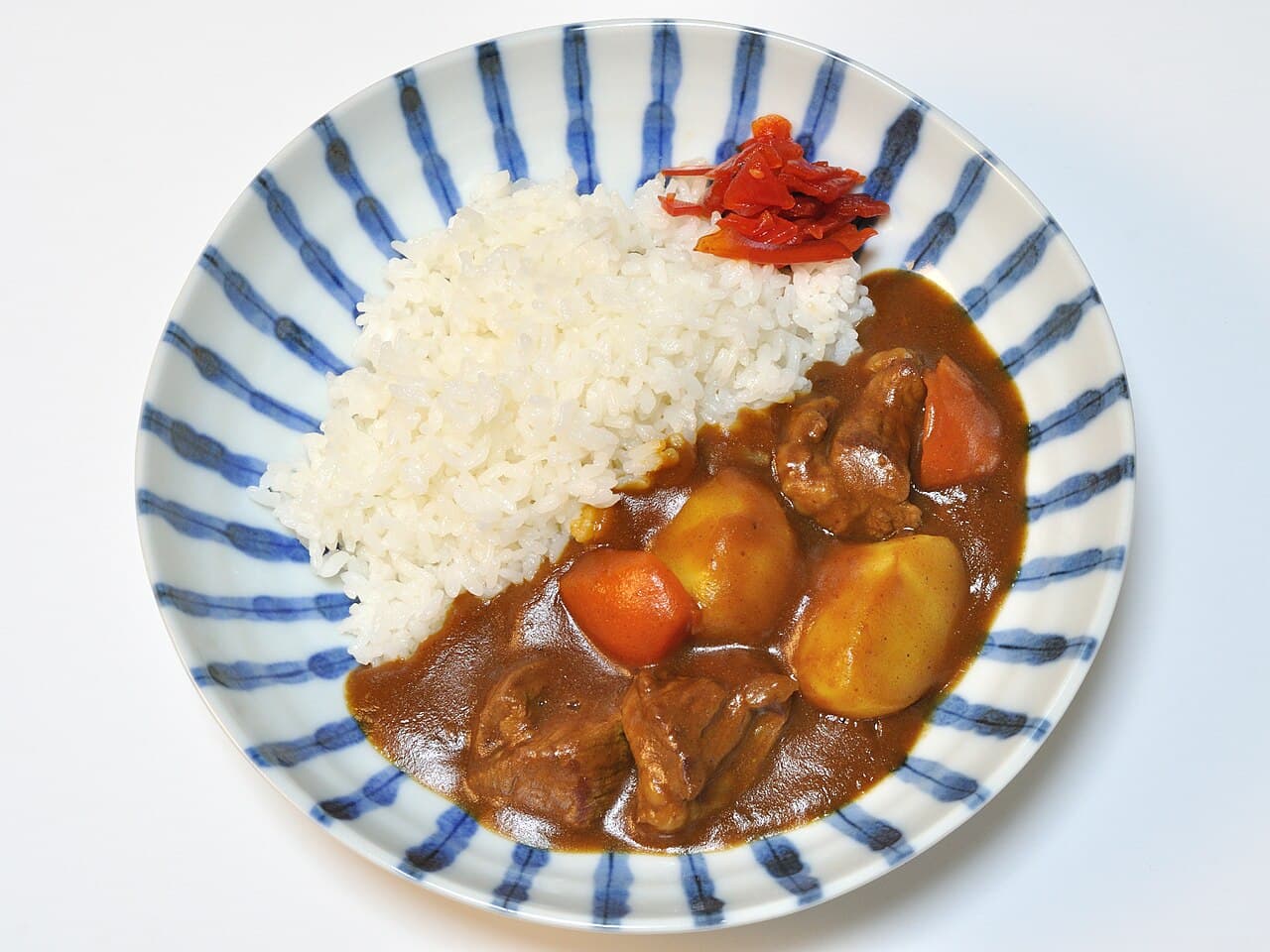
Standard Japanese curry is not gluten-free. The thick, glossy sauce that defines curry rice is made from a roux — wheat flour cooked in fat — and the boxed roux blocks that nearly every home and restaurant uses (S&B Golden Curry, House Vermont Curry, House Kokumaro) list wheat flour as a primary ingredient. If you have celiac disease, assume any ordinary plate of Japanese curry contains gluten unless you have specifically confirmed otherwise.
The good news: curry is one of the easier Japanese dishes to make safe, because the gluten lives in one predictable place — the roux — and rice-flour replacements exist. Here is exactly where the gluten hides and how to eat curry in Japan without guessing.
Why the roux is the problem
Japanese curry (カレー, karē) is not the same as Indian or Thai curry. Its body and cling come from a European-style roux: wheat flour toasted in butter or oil, then blended with curry spices. That roux is what makes the sauce thick enough to blanket rice. Because the wheat flour is cooked into the sauce, you cannot pick it out or scrape it off — the gluten is dissolved throughout.
Boxed curry roux blocks are the default in Japan. A quick label check confirms the issue:
| Product (as of 2026) | Gluten status | Reason |
|---|---|---|
| S&B Golden Curry (block) | Not GF | Lists wheat flour |
| House Vermont Curry (block) | Not GF | Lists wheat flour |
| House Kokumaro (block) | Not GF | Lists wheat flour |
| S&B Oriental Curry Powder | Usually GF | Spice blend, no wheat flour |
| Cosmo 米粉のカレールー (rice-flour roux) | GF | Thickened with rice flour |
The pattern is simple: the block/flake roux almost always contains wheat, while a plain curry powder (just the spices) usually does not, because the wheat is added later as a thickener. The same warning covers the ready-to-eat retort pouch curries sold in every convenience store and supermarket — those microwave packs are thickened with the identical wheat-flour roux as the blocks, so grabbing a pouch off the shelf is not a safe shortcut. Read the ingredient panel every time; recipes and formulations change without notice.
Katsu curry has a second gluten source
Order katsu curry and you stack a second problem on top of the sauce: the pork or chicken cutlet is coated in panko, Japanese breadcrumbs made from wheat, then deep-fried. Even if the curry sauce were somehow gluten-free, the breading is not — and cutlets are usually fried in shared oil with other breaded items. For the full breakdown, see our guide on whether tonkatsu is gluten-free. If you want curry, order it without the katsu.
Two related curry dishes are automatic no-gos for the same reason. Curry udon is curry sauce ladled over thick wheat noodles, and curry pan (curry bread) is a wheat bun stuffed with curry, breaded in panko, and deep-fried — both are wheat from the very first bite, before the roux even enters the picture.
Other hidden gluten in curry
Even a wheat-flour-free curry can pick up gluten from supporting ingredients:
- Soy sauce (shoyu): most Japanese soy sauce is brewed with wheat, and cooks often stir a splash into curry for depth. See is soy sauce gluten-free in Japan.
- Worcestershire / tonkatsu sauce: frequently added to home curry; usually contains wheat.
- Bouillon and instant dashi: some stock cubes and hondashi include wheat-derived ingredients.
- Fukujinzuke pickles on the side can contain wheat in their seasoning.
How to eat curry gluten-free in Japan
Cook it yourself. If you have a kitchen, the easiest safe route is a rice-flour curry roux. Brands like Cosmo (コスモ食品) 米粉のカレールー and various millet (kibi) curry blocks are sold online and in health-food shops, and give you the classic thick texture with no wheat. Alternatively, make a roux from scratch with rice flour or cornstarch plus S&B Oriental Curry Powder.
Don't expect a regular curry restaurant to adapt the sauce. A standard curry shop essentially cannot make its house curry gluten-free on request. The roux is prepared in bulk hours before service — usually from the same wheat-based blocks or a from-scratch wheat roux — so the flour is already dissolved through the whole pot and there is no way to remove it. Staff can hold the katsu or leave off the fukujinzuke, but they cannot un-thicken a sauce that is already made. That is precisely why the safe restaurant options are purpose-built allergen products, not tweaked versions of the normal menu.
At a restaurant, use an allergen chart. The chain CoCo Ichibanya offers an allergen-free curry (アレルギー対応カレー) that is free of 7 major allergens including wheat. As of 2026 it is prepared offsite in a sealed retort pouch and reheated to limit cross-contact, then served over rice. Important caveats: it is not celiac-certified, the kitchen is not a dedicated gluten-free facility, the rice and fried toppings carry cross-contamination risk, and menus vary by location — always scan the QR allergen menu and confirm before ordering.
Show staff a written phrase. Language makes or breaks this. Keep this on your phone:
- 小麦アレルギーがあります。カレーのルーに小麦は入っていますか?
- Komugi arerugī ga arimasu. Karē no rū ni komugi wa haitte imasu ka?
- "I have a wheat allergy. Does the curry roux contain wheat?"
Framing it as an allergy (アレルギー) rather than a lifestyle choice gets a far more careful answer.
Quick verdict
| Dish | Safe for celiac? |
|---|---|
| Regular curry rice (boxed roux) | No — wheat roux |
| Katsu curry | No — roux + panko |
| Curry udon / curry pan | No — wheat noodles / bread |
| Homemade rice-flour roux curry | Yes |
| CoCo Ichibanya allergen-free curry | Likely wheat-free, but not celiac-certified |
Bottom line: don't eat standard Japanese curry if you're strictly gluten-free, but with a rice-flour roux at home or a carefully ordered allergen-managed pouch, you don't have to skip Japan's favorite comfort food. For the wider picture, read our gluten-free Japan travel guide.
Sources
FAQ
- Is Japanese curry rice gluten-free?
- No. Standard Japanese curry rice is not gluten-free because the sauce is thickened with a wheat-flour roux. Popular boxed blocks such as S&B Golden Curry and House Vermont Curry list wheat as a main ingredient (as of 2026). The wheat is cooked into the sauce and cannot be removed, so assume ordinary curry contains gluten unless you use a rice-flour roux or a verified allergen-free product.
- Is katsu curry gluten-free?
- No. Katsu curry is doubly unsafe: the curry sauce uses a wheat-flour roux, and the katsu cutlet is coated in panko breadcrumbs made from wheat, then usually deep-fried in shared oil. Even swapping the sauce would not fix the breading. If you need curry, order it without the katsu and confirm the roux is wheat-free.
- Does S&B Golden Curry contain gluten?
- Yes. S&B Golden Curry roux blocks list wheat flour as a primary ingredient and are not gluten-free (as of 2026). The same is true of House Vermont Curry and most block or flake roux. If you want an S&B option, look instead at plain S&B curry powder, which is a spice blend without the wheat thickener, and add your own rice-flour roux.
- Can I find gluten-free curry at Japanese restaurants?
- Sometimes. CoCo Ichibanya, Japan's largest curry chain, serves an allergen-free curry free of 7 major allergens including wheat, prepared offsite in a sealed pouch to limit cross-contact (as of 2026). However, it is not celiac-certified, kitchens are not dedicated gluten-free, and rice or toppings can carry cross-contamination. A regular curry restaurant generally cannot make its standard sauce gluten-free, because the wheat roux is pre-cooked in bulk. Always check the QR allergen menu and tell staff you have a wheat allergy.
- How do I make gluten-free Japanese curry?
- Use a rice-flour curry roux such as Cosmo (コスモ) 米粉のカレールー, sold online and in Japanese health-food shops, which delivers the classic thick texture without wheat. Alternatively, make a roux from scratch by cooking rice flour or cornstarch in oil, then stirring in gluten-free curry powder. Also swap regular soy sauce and Worcestershire sauce for tamari or certified gluten-free versions.