
Food culture
Kissaten Retro Cafe Guide: Tokyo's Showa-Era Coffee Houses
What a kissaten actually is
A kissaten (喫茶店) is a traditional Japanese coffee house that peaked in the Showa era, roughly the 1950s to 1980s. Where a modern cafe optimises for turnover and takeaway cups, a kissaten is engineered for lingering: dim amber lighting, velvet or leather booths, a hush broken only by clinking spoons and low jazz or classical. Many owners have run the same room for decades. You are not just buying coffee — you are renting a quiet seat in a preserved world.
The coffee is the anchor. Beans are often hand-dripped or brewed in a theatrical glass siphon, poured strong and served black with a small pitcher of cream and rock sugar. It is bitter, deliberate, and meant to be sipped, not gulped.
What to order
The classic order is coffee plus one hearty snack. Look for:
- Pizza toast — thick-cut bread with ketchup, cheese and a few vegetables, grilled until bubbling. A kissaten invention, not Italian.
- Napolitan — spaghetti stir-fried with ketchup, sausage and peppers. Comforting, a little retro, entirely Japanese.
- Cream soda — melon soda in electric green with a scoop of vanilla and a maraschino cherry. Order it for the photo, stay for the taste.
- Purin (custard pudding) and omurice, the ketchup-draped omelette rice that shares this same nostalgic yoshoku lineage — see our omurice guide for where the dish came from.
For a fuller picture of Japan's café and drink culture, our Japanese drinks guide maps out what to sip beyond coffee.
Etiquette and how to sit
A kissaten runs on gentle, unspoken rules. One drink per person buys you a long stay — an hour with a book is welcome and normal. Keep your voice low. Many rooms are cash-only, and a fair number still allow smoking (or have a smoking section), so check the door if that matters to you. Photograph your cream soda quietly; avoid turning the room into a set.
Kissaten are one of Tokyo's better-value pleasures — a coffee-and-toast set is often under ¥1,000, which our budget Tokyo guide folds into a day that doesn't drain your wallet.
Why a traveller should care
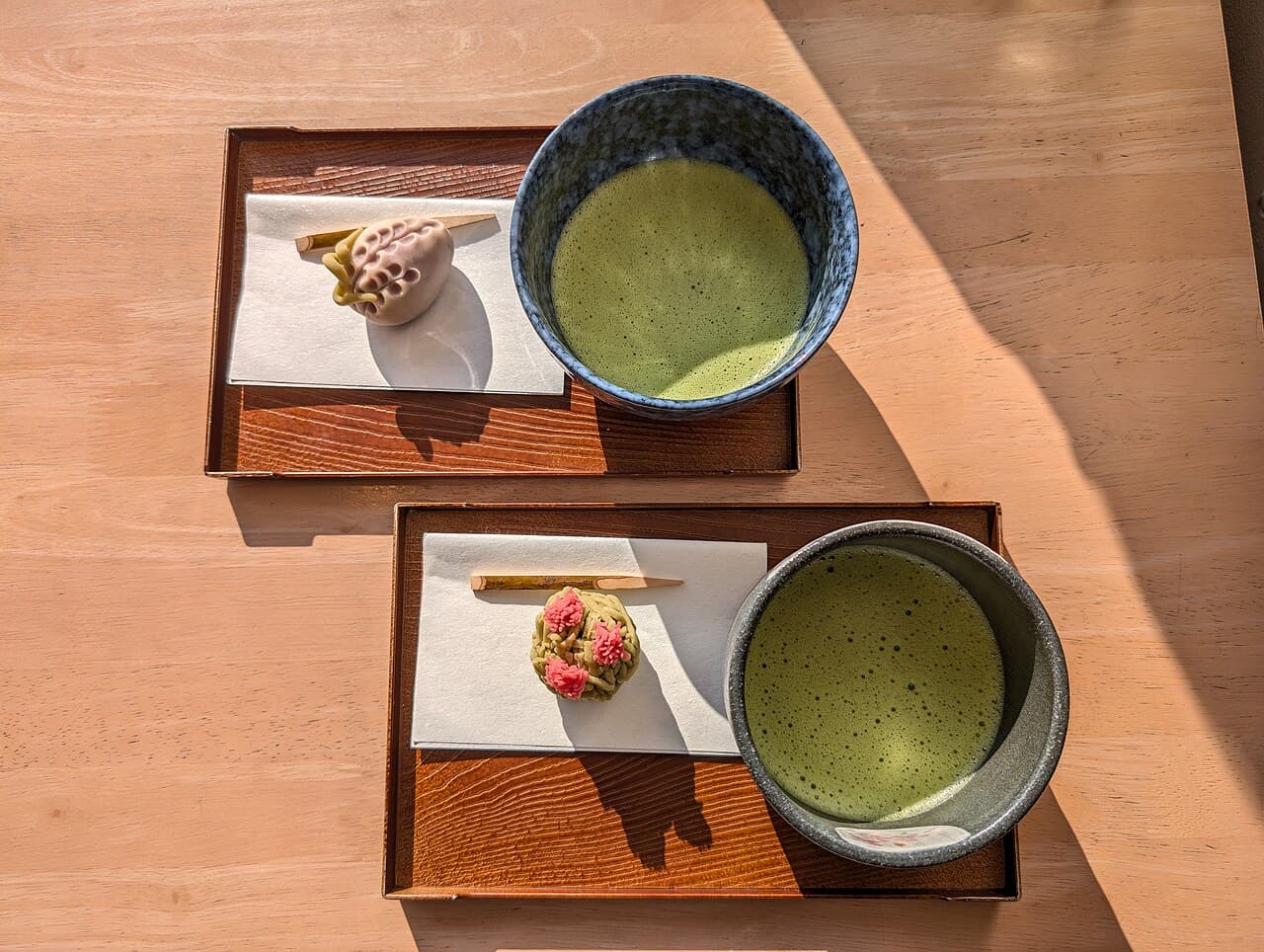
Modern Tokyo moves fast; a kissaten is where it deliberately doesn't. It is a living museum you're allowed to eat inside — no ticket, just an order. For a sweeter, tea-forward version of the same slow ritual, a traditional matcha and wagashi pairing scratches the identical itch.
How to visit well: go mid-afternoon, order the coffee-and-toast set, bring cash, keep your voice down, and don't rush. The whole point is that no one wants you to leave.
Sources
FAQ
- How is a kissaten different from a modern cafe?
- A kissaten is a Showa-era coffee house built for lingering — siphon or hand-dripped coffee, retro yoshoku snacks, quiet booths and decades-old decor. Modern cafes optimise for espresso drinks, laptops and quick turnover; kissaten want you to stay.
- Do I need to speak Japanese to visit one?
- Rarely essential. Menus are often photo-based or have plastic samples, and pointing works fine. Some kissaten are cash-only and a few still allow smoking, so carry yen and check the door if that matters to you.
- What should a first-timer order?
- The coffee-and-toast set is the safe classic. Add a cream soda for the experience, or napolitan if you want something more filling. Everything is comfortingly familiar rather than adventurous.