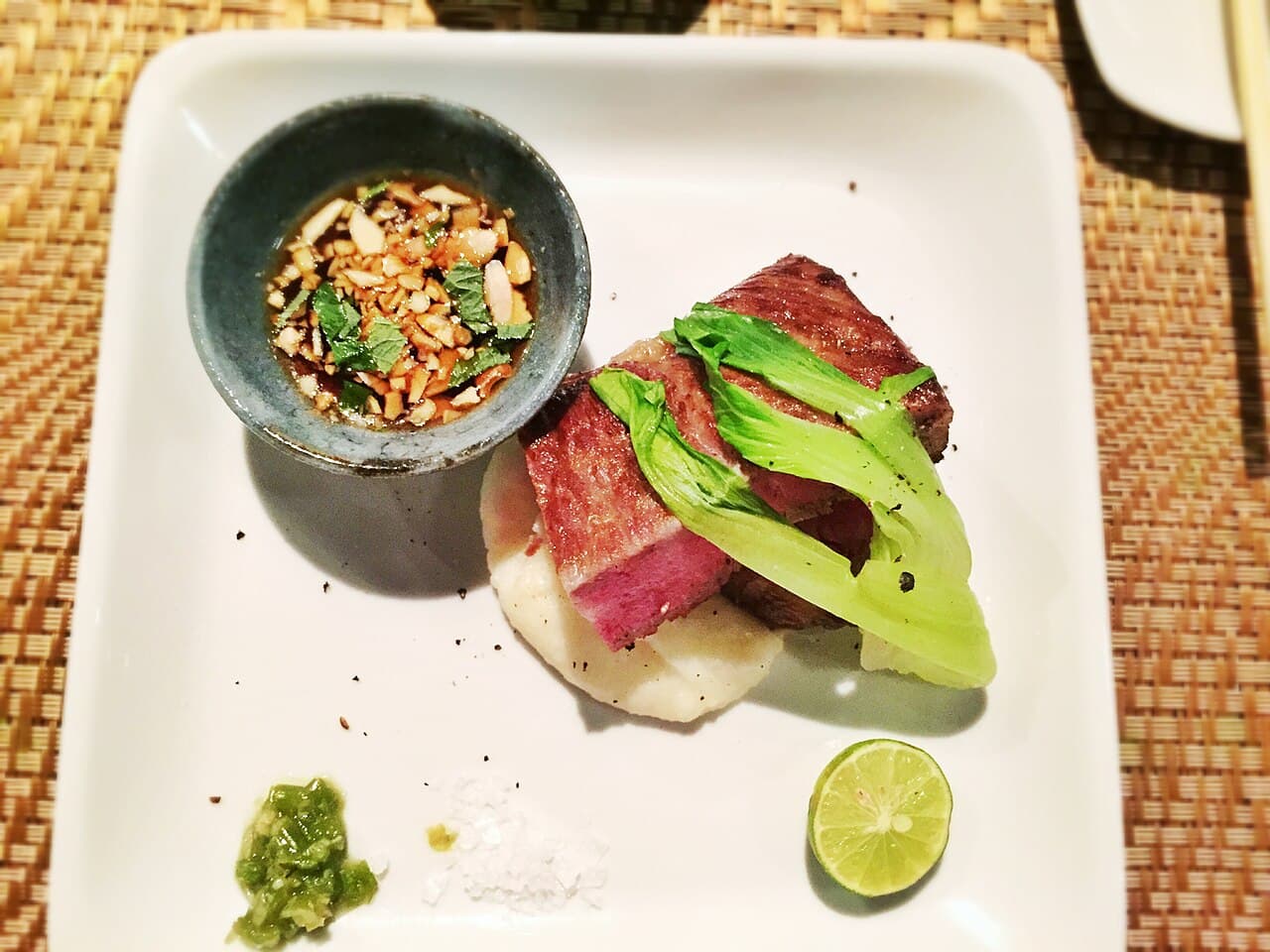
★ Edomae nigiri course — soy sauce to fish, all halal-certified
Japan's first halal-certified sushi house, steps from Senso-ji, serving full Edomae nigiri — soy, fish and pickles all halal — with a second-floor prayer room built with the local mosque.
★ A5 halal-certified wagyu grilled over shichirin charcoal
Inside a creaky two-storey wooden folk house a short walk from Shibuya, A5 halal-certified wagyu sizzles over shichirin charcoal — with a prayer room upstairs.
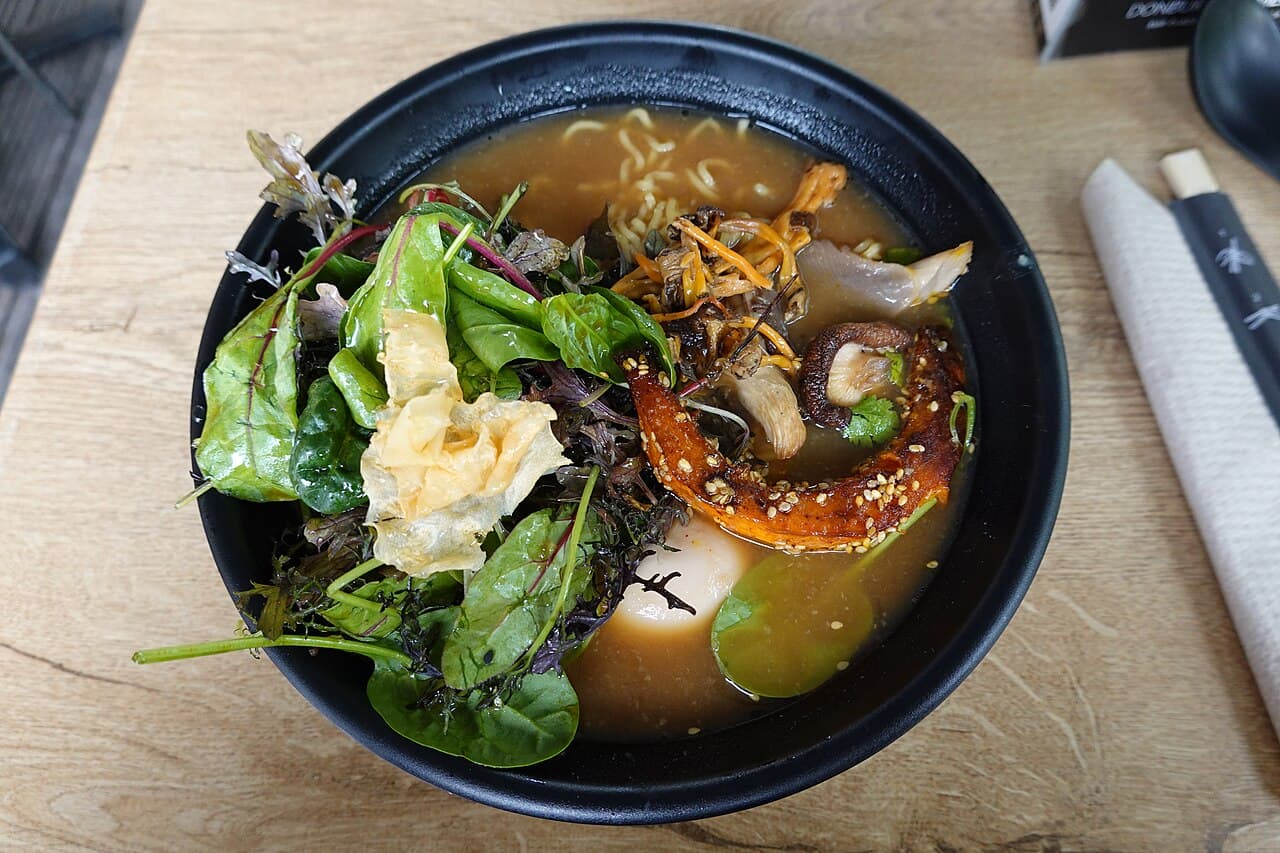
★ Chicken paitan ramen — creamy broth from halal chicken simmered over 6 hours
A no-pork, no-alcohol ramen counter east of Shinjuku Gyoen where Japan Islamic Trust-certified halal chicken is coaxed into a tonkotsu-rich paitan that converts sceptics.
★ Seasonal shojin kaiseki paired with sake and wine, refreshed every three weeks
A refined Roppongi shojin restaurant led by chef Daisuke Nomura, formerly of two-Michelin-starred Daigo, pairing plant-based Zen cuisine with carefully chosen sake and wine.
★ Kuchifuku set — nine seasonal vegan sides with rice and miso soup
A casual, affordable vegan cafeteria run by a Kamakura temple lineage beneath the Akihabara rail arches, where even garlic and onion are forsaken in true shojin style.
★ Multi-course fucha-ryori banquet in a private tatami room
A 1959-vintage temple-cuisine institution near Iriya where John Lennon and Yoko Ono once dined, serving 300-year-old fucha-ryori in garden-view tatami rooms.
Fully plant-based, build-your-own falafel pitas and hummus bowls inside Shibuya PARCO — a fast, affordable vegan refuel between the neighbourhood's shopping and nightlife.
★ Plant-based 'meat & fish' course made entirely from vegetables
Once crowned the world's #1 vegan restaurant on HappyCow, this Jiyugaoka temple of 'new washoku' conjures convincing meat and fish dishes from nothing but vegetables — and welcomes vegan and Muslim diners alike.
A 100% vegan tantanmen counter inside Tokyo Station's gates, where a creamy sesame broth fools even die-hard ramen carnivores — perfect for a transit-pause bowl.
The Shinjuku birthplace of the cloud-soft 'Heavenly Vegan Pancakes' that draw queues from vegans and non-vegans alike, with gluten-free options on the same menu.
★ Premium nigiri like otoro and jumbo sweet shrimp at modest prices
A popular conveyor-belt sushi restaurant on the 8th floor of Seibu Shibuya, praised for generous cuts of quality fish at modest prices; lines are common. Seafood-forward and good for solo diners, but not gluten-free.
A long-running, hugely popular sushi restaurant inside Shibuya Mark City known for large, value-for-money nigiri; expect a wait and use the ticket system. Seafood-forward and well-suited to pescatarians, though not gluten-free.
★ Edo-style omakase with multiple types of natural tuna
A respected Edomae sushi counter in the Tsukiji Outer Market founded by a third-generation fish wholesaler, with a lunch kaisendon/sushi range and pricier dinner omakase. Entirely seafood-focused, ideal for pescatarians.
★ Fresh Hokkaido (Nemuro) seafood nigiri at reasonable prices
A Hokkaido-based kaiten-sushi chain on the 5th floor of KITTE by Tokyo Station, serving fresh Nemuro seafood. It is naturally seafood-forward (no meat needed) and easy for solo diners, though the dishes are not gluten-free.
★ Cook-your-own okonomiyaki with a gluten-free rice-flour batter option
A large, tourist-friendly DIY okonomiyaki spot in Harajuku that offers a gluten-free rice-flour batter on request, with an English menu and vegan/vegetarian options. You cook on a shared griddle where wheat batter is also used, so ask staff about cross-contamination if you are highly sensitive.
★ Three styles of juwari soba (inaka, sarashina, dattan)
A specialist serving juwari (100% buckwheat) soba with no wheat flour, so the noodles themselves are naturally gluten-free. Note the standard dipping sauce/soba-yu and a shared kitchen mean it is not certified celiac-safe; confirm the tsuyu if you are highly sensitive.
★ Rice-flour cakes and French-style pastries (madeleines, canelés)
A sister-run cafe whose entire cake and pastry lineup is gluten-free, made with Hokkaido rice flour instead of wheat. As a dedicated gluten-free kitchen the cross-contamination risk is low, but it is a small space, so reserving via Instagram is recommended.
★ Nasi goreng, beef rendang and gado-gado using halal-certified beef
A Muslim-friendly Indonesian restaurant near the Indonesian Embassy; pork- and alcohol-free with a prayer space, serving meals made with halal-certified beef (the venue itself is Muslim-friendly rather than formally certified).
★ Turkish sweets and spiced tea, with an attached halal market
A Muslim-friendly Turkish patisserie/cafe inside Japan's largest mosque, the Tokyo Camii & Diyanet Turkish Culture Center, serving halal confectionery alongside an attached halal market. The mosque is open to non-Muslim visitors outside prayer times.
★ All-you-can-eat premium sushi, snow crab and halal-certified A5 wagyu
A sushi izakaya offering a dedicated halal-CERTIFIED course (100% halal ingredients with separate utensils and storage). Because the general venue also serves alcohol, it is best treated as Muslim-friendly with a certified halal course — request the halal course when booking.
★ Lamb shabu-shabu simmered from lamb neck bones for six hours, plus Uyghur dishes
A halal-CERTIFIED (NAHA / Nippon Asia Halal Association) restaurant run by a Uyghur Muslim owner; a fully alcohol-free venue with a prayer room serving Uyghur and Japanese dishes.
★ Penang assam laksa, curry mee and nasi lemak from Malaysian ingredients
A halal-CERTIFIED Malaysian restaurant (certified by Malaysia's JAKIM) and a 30-year Ikebukuro institution; pork- and alcohol-free and popular with Muslim travellers and students.
★ Plant-based croissants, cinnamon rolls and seasonal-vegetable tartines
A 100% vegan bakery and cafe opened in 2020 a minute from Setagaya-Daita Station, near Shimokitazawa, using locally sourced Japanese vegetables and wheat. All breads and pastries are made without eggs, milk or butter.
★ Creamy sesame-tahini broth ramen with soy meat and raw vegetables
A 100% vegan ramen specialist that opened in June 2025 near Harajuku's Laforet, a few minutes from Meiji-Jingumae Station. Its signature bowl pairs a rich sesame-tahini broth with soy meat and colourful raw vegetables.
★ Tempeh cutlet, double curry, hummus sandwich and vegan karaage
An all-vegan cafe opened in 2013 in a renovated warehouse by a riverside park between Kinshicho and Tokyo Skytree, using organic, pesticide-free produce. The whole menu is plant-based, from curries and tempeh cutlets to soft-serve desserts.
★ Organic macrobiotic cooking incl. vegan sushi of vinegared brown rice and seasonal vegetables
One of Tokyo's oldest natural-food restaurants, open in Harajuku since 1976, serving organic, additive-free cooking with strong vegan and macrobiotic options. It is well used to foreign diners and offers an English menu.
★ Organic vegetable curries and tandoor naan with vegan, vegetarian and halal options
The Shibuya outpost of the long-running Nataraj natural-Indian vegetarian group, offering spice-rich organic vegetable curries, tandoor naan and clearly labelled vegan, vegetarian and halal menus in the heart of Shibuya.
★ Organic vegetable curries with tandoor naan; vegan, vegetarian and halal menus
A pioneering natural Indian vegetarian restaurant (the brand dates to 1989) serving spice-forward curries and tandoor naan in a spacious basement near Ogikubo Station. Vegan, vegetarian, halal and five-allium-free menus make it unusually accommodating.
A busy Tsukiji Outer Market kaisendon specialist offering around 30 seafood rice bowls made with fish bought daily at Toyosu — the raw-seafood-over-rice bowls are naturally pescatarian. Typically eaten with wheat-containing soy sauce, so not gluten-free unless you request/bring tamari.
A long-established (1889) Edomae sushi house in the Tsukiji Outer Market that stayed open after the market's relocation, serving classic nigiri sets and sashimi. As seafood-and-rice sushi it is naturally pescatarian; not gluten-free (soy sauce contains wheat).
A famous Toyosu Market sushi counter (relocated from old Tsukiji) serving a chef's-selection omakase noted for its premium tuna. Pure seafood-and-rice sushi makes it naturally pescatarian; early market hours and not gluten-free (soy sauce contains wheat).
A three-Michelin-star Kagurazaka kaiseki restaurant serving a seasonal omakase course. Kaiseki traditionally includes some meat/dashi, so a pescatarian (seafood, no-meat) menu must be requested in advance and confirmed directly. Not gluten-free.
An acclaimed Ginza Edomae sushi counter (chef Hiroyuki Sato) known for a nigiri-only course showcasing aged bluefin tuna. As pure seafood-and-rice sushi it is naturally pescatarian; not gluten-free (soy/vinegar). Cards only; reservations open about two months ahead.
★ Julienned carrot kakiage and prawn / anago tempura
A two-Michelin-star Ginza tempura counter celebrated for exceptionally light frying and its signature julienned-carrot kakiage. Courses are built only on seafood and vegetables (no meat), making it naturally pescatarian; the wheat-flour batter means it is not gluten-free.
🐟페스코
Anniversary
Business
Tokyo Station · Ramen (with a gluten-free option) · ¥
★ Gluten-free shio (salt) ramen with rice-based noodles; veggie 'Vegisoba'
A popular Tokyo Ramen Street shop offering a gluten-free salt ramen made with rice-based noodles, plus its colorful vegetable 'Vegisoba'. It is a has-options shop, not a dedicated GF kitchen — the official site warns of possible cross-contamination, so it is not celiac-safe.
A dedicated gluten-free cafe whose entire kitchen is wheat-free, serving GF Japanese comfort food such as gyoza, karaage, ramen and yakisoba with English-marked menus. Its Tabelog listing is currently status-undetermined, so confirm hours via its Instagram before visiting.
★ Baked rice-flour curry pan and cube-shaped rice-flour shokupan
A dedicated gluten-free bakery using Japanese rice flour and natural yeast (no wheat) for breads, curry pan, baguettes and pizzas, many of them also vegan. A small takeout-focused shop, so hours can shift seasonally — confirm before a special trip.
★ Seasonal Mie-Prefecture kaiseki course (halal version on request)
A counter-style kaiseki restaurant in Nishi-Azabu offering a dedicated multi-course menu made without pork, alcohol or mirin on advance request. Muslim-friendly / pork- and alcohol-free (not formally certified); book the halal course about a week ahead.
A cafe a 2-minute walk from Kaminarimon serving food without pork or alcohol, using halal meat alongside vegan and vegetarian dishes. Muslim-friendly / pork- and alcohol-free, not third-party halal-certified.
A halal-CERTIFIED ramen shop (no pork) about 7 minutes from Asakusa Station, building its broth from over 20 varieties of wagyu beef and seasonings, with a dedicated prayer room. Sister concept to Gyumon's Shibuya wagyu yakiniku.
A small, reservation-only vegan restaurant in Asakusa serving a chef's 10–14 course tasting menu. It seats only a handful of guests and opens a limited number of days per week, so reserve ahead.
A second-floor all-vegan bistro in Harajuku opened in 2021 by the Kyushu Jangara ramen chain. The menu spans vegan ramen, curries, grilled soy-meat plates, gyoza and karaage.
A 100% vegan restaurant near Omotesando Station serving Mediterranean-influenced plant-based dishes and desserts across breakfast, lunch and dinner, from the team behind the former Pure Cafe.
★ Seasonal brown-rice set (ichiju-sansai) and steamed vegetables
An organic, plant-centered Japanese canteen by Neal's Yard Remedies near Omotesando Station, open since 2003. It serves seasonal brown-rice set meals (ichiju-sansai) and steamed vegetable plates.
The Ginza outpost of a six-generation Wakayama fruit farm builds its ever-changing parfaits from layers of freshly cut estate fruit, soft serve, and homemade jam.
★ Seasonal fruit parfait with homemade fruit ice cream
A 1946 greengrocer-turned-parfait parlour near Hanayashiki where seasonal fruit from Ota Market is piled over homemade ice cream, drawing patient queues.
Run by a Ningyocho meat purveyor that opened as a butcher in 1912, this kappo serves sukiyaki of premium domestic wagyu and made the Tabelog 100 hot-pot list.
★ Old-school Edomae tendon, sesame-oil-fried tempura in dark sweet sauce
An 1887-founded Asakusa institution near Senso-ji serving old-school Edomae tendon, its tempura fried in sesame oil and lacquered in a dark sweet sauce.
A stylish little Daikanyama ohagi cafe where the rice-and-bean sweets and kuzumochi shakes are all gluten-free, vegan, dairy-free and free of white sugar.
★ Plant-based gluten-free Mont Blanc & rice-flour gelato
A French-style Daikanyama patisserie where every cake, doughnut and scoop of gelato is fully vegan and gluten-free, built on rice flour and plant milk.
A hidden 3rd-floor Asakusa shop serving creamy white-broth ramen crowned with A5 halal wagyu plus a rare halal wagyu beef cutlet, with a prayer space on-site.
Steps from Senso-ji, this pioneering halal-certified ramen shop swaps pork for grilled chicken and lard for sesame oil, with a 2nd-floor prayer room for Muslim diners.
★ Gluten-free vegan burger set & soy-meat plates with organic vegan soft serve
An organic, fully plant-based cafe between Nakameguro and Yutenji, serving soy-meat plates, gluten-free burgers and vegan soft serve in a wellness-minded space.
The dine-in fruit parlour of Japan's oldest luxury fruit purveyor, founded in Nihonbashi in 1834, serving lavish parfaits of world-class fruit in a bright, elegant salon.
★ Seasonal fresh-fruit shaved ice with house-made syrup
A pioneering kakigori specialist in old-town Yanaka, hand-shaving natural Nikko ice into fluffy mountains drenched in house-made seasonal fruit syrups — summer lines wrap the block.
★ Beef curry with a secret spice blend & a whole boiled potato
The original champion of the Kanda Curry Grand Prix; this book-town flagship serves a rich, fruit-rounded European-style curry that starts with a whole steaming potato.
★ Tomeshi — soy-cooked rice crowned with broth-soaked tofu
Founded in 1923, this Kanto-style oden institution simmers a decades-old dark dashi and is famous for tomeshi — broth-soaked tofu over soy-stained rice.
A reservation-only Ginza counter where an entirely gluten-free kushiage omakase is fried in rice oil with rice-flour breadcrumbs — a rare safe haven for coeliacs.
A fifth-generation wagyu family's alcohol-free basement grill in Ginza serving 100% halal-certified Japanese wagyu steaks and burgers, so every traveller can taste real wagyu. (The halal kitchen is the basement venue.)
A tiny tatami-floored diner on the Shimokitazawa backstreets where every bowl of rich, medicinal-herb ramen is 100% plant-based and built on sprouted brown rice.
A perpetually-queued Tabelog Top-100 udon shop near Shinjuku where every bowl of springy noodles is cut and boiled to order — try the cult carbonara udon.
A hushed, wood-warmed Shibuya kissaten since 1989 whose charcoal-roasted hand-drip coffee, served in carefully chosen antique cups, is said to have inspired Blue Bottle's founder.
A Sri Lankan-Muslim owner's wholly halal-certified ramen shop where collagen-rich chicken broth meets a fiery soy-sauce kick, steps from Assalaam Mosque.
A farm-to-table cellar by Meguro Station serving pesticide-free kale and seasonal vegetables — grown on their own Chiba farm — with a genuine gluten-free menu.
A Michelin-starred soba sanctuary where the chef grows and hand-mills his own Ibaraki buckwheat into pure 100% juwari noodles — the closest a coeliac traveller comes to trustworthy Tokyo soba.
★ Gluten-free crust California pizza (vegan cheese option)
A Roppongi institution since 1996 where homesick Americans and coeliac travellers alike crowd the bar for craft beer and proper gluten-free crust pizza topped with vegan cheese.
The 1947 Ginza institution that invented katsu curry itself, plating a crisp pork cutlet over rich Western-style curry at the very spot where the dish was born.
★ No.7 Premium Matcha Gelato — the world's richest
This 1848-founded tea house teams up with Shizuoka's Nanaya to serve matcha gelato in seven escalating intensities, climaxing in a near-black No. 7 so concentrated it tastes like eating pure tea leaves.
The towering wooden-beamed izakaya that inspired Kill Bill's House of Blue Leaves, where lantern light conjures an Edo-era warehouse over plates of fresh soba and charcoal skewers.
★ Kuroge wagyu sukiyaki, simmered tableside in house warishita
Founded in 1895, this Tabelog Top-100 sukiyaki house simmers exquisitely marbled Kuroge wagyu in its signature warishita while kimono-clad staff tend the pot at your table.
A 1939 Meguro institution where white-clad chefs fry plump pork cutlets in a theatrical open kitchen, plating them with endless free refills of cabbage and rice.
Tsukishima's oldest monja house, opened in 1950 in the corner of an old candy shop, where you scrape and griddle your own loose, savory batter exactly the way the neighbourhood invented it.
A long-running Akasaka basement where all-halal Turkish grills, char-licked kebabs and midweek belly dancing give Muslim diners a festive night out steps from the station.
This flagship near Shinjuku-sanchome crowns a 100% halal-certified bowl with slices of seared A5 wagyu roast beef — pork- and alcohol-free, prayer space on hand.
A two-minute stroll from Senso-ji, this all-halal kitchen ladles rich Japanese curry over crisp cutlets and even Kobe wagyu, so Muslim travellers never have to skip Japan's comfort dish.
★ 'Eel' sushi and namasu crafted entirely from tofu and burdock
A reservation-only tatami refuge where a chef who trained 25 years at Takayama's Kakusho turns the seasons into meat-free trompe-l'oeil — tofu that tastes like eel, burdock that becomes sushi.
★ Kinugoshi silken tofu, said to be invented here in Edo
Founded over 330 years ago, this Negishi institution claims to have invented silken tofu in Edo, and still serves a quiet tofu-kaiseki course beside the poet Shiki's old hermitage.
AIN SOPH.'s flagship spreads across four Ginza floors, where a ground-floor patisserie of vegan pudding gives way to refined plant-based courses upstairs.
A legendary fish izakaya tucked beneath the Yurakucho railway arches since 1946, run by Brit-owner Andy who hand-picks the catch at Toyosu Market each dawn.
★ Mori soba (cold buckwheat noodles) and tempura soba
Founded in 1884 and housed in a Tokyo-designated historic wooden building, this Kanda institution serves hand-cut soba in a bustling, time-worn dining hall.
★ Unaju — Edomae eel steamed then charcoal-grilled
A Michelin-starred eel house with over 200 years of history, where the fifth-generation master steams and charcoal-grills Edomae unagi to melt-in-the-mouth perfection.
Founded in 1924, this beloved tempura institution fries seasonal seafood and vegetables in pure sesame oil piece by piece — the accessible Ginza branch sits atop Matsuya department store.
★ Wagyu sirloin and tiger prawn tempura in rice-flour batter
A ten-seat counter beneath a canopy of cherry blossoms where every course — even the wagyu and prawn tempura — is fried in rice flour: fully gluten-free and halal.