
Dietary guide
Is Ramen Gluten-Free in Japan? The Honest Answer for Coeliacs
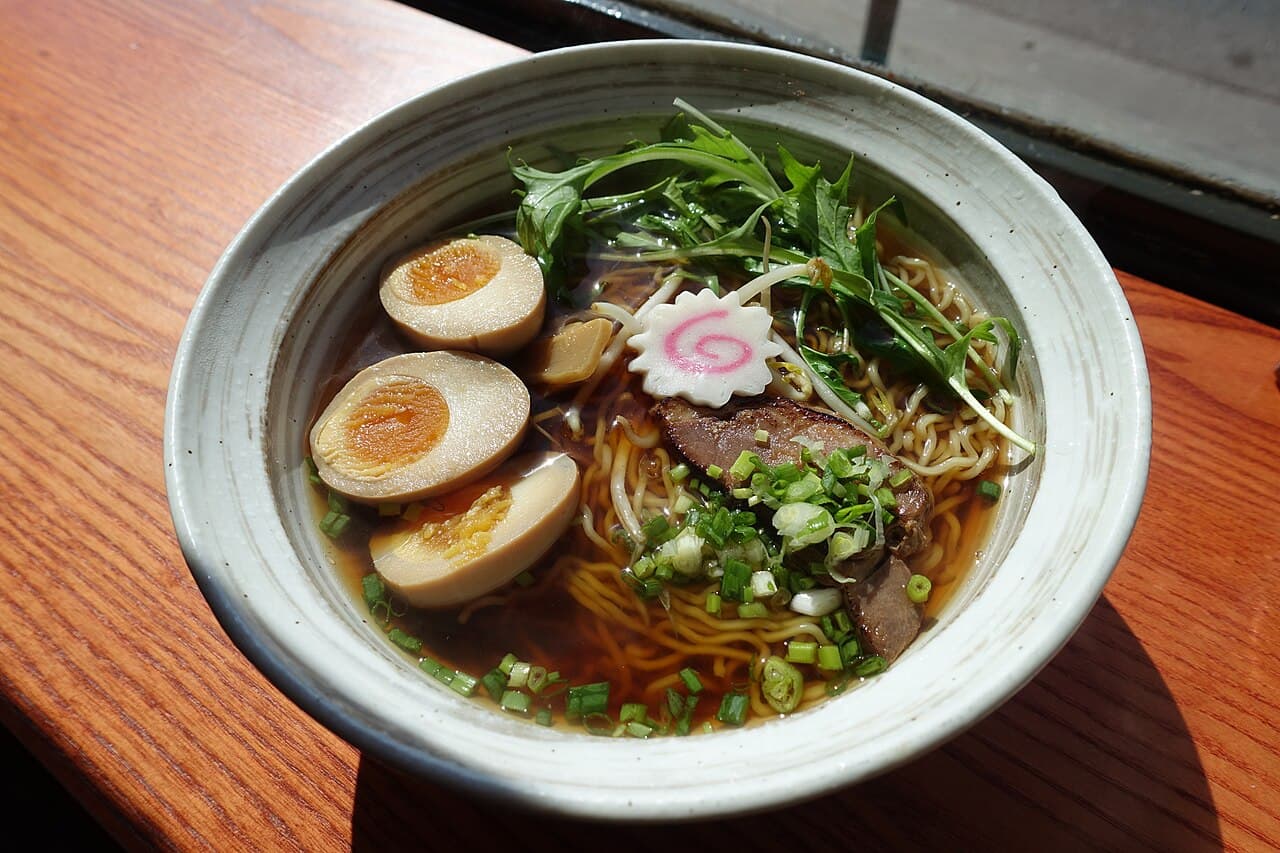
© Guilhem Vellut / CC BY 2.0, via Wikimedia Commons · CC BY 2.0
Standard ramen in Japan is not gluten-free — and the wheat noodles are only the first problem. The tare (flavour base) is usually built on wheat-brewed soy sauce, the dashi can hide wheat seasonings, and every bowl is boiled in a shared pot of water. For a coeliac, a normal ramen shop is a high-risk place. The good news: Japan now has dedicated gluten-free ramen makers using rice noodles and separate equipment, so you can still enjoy a real bowl — you just can't do it at a standard counter.
The three gluten sources in a normal bowl
Most people assume ramen is unsafe "because of the noodles." True, but there are actually three independent problems, and fixing only one does not make the bowl safe.
- The noodles. Ramen noodles (chūkamen) are made from wheat flour plus kansui (alkaline water). They are pure wheat — there is no such thing as accidentally gluten-free ramen noodles.
- The tare / broth seasoning. The concentrated base that flavours the soup is very often soy sauce (shoyu). Standard Japanese soy sauce is brewed with roughly half wheat, so shoyu ramen carries gluten twice over. Miso tare adds a second, independent risk: much Japanese miso is mugi (barley) miso, and barley is itself a gluten grain — so a miso bowl can carry gluten from the paste before any soy sauce is added. Even many "shio" (salt) tares contain soy sauce or wheat-derived seasonings.
- The dashi and finishing touches. Pure katsuo/kombu dashi is naturally gluten-free, but restaurants frequently add soy sauce, and instant dashi powder (dashi-no-moto) often contains wheat-based soy sauce. Add-ons like chāshū pork (marinated in soy sauce), menma and flavoured oils can each carry gluten.
| Ramen component | Typical ingredient | Contains gluten? |
|---|---|---|
| Noodles (chūkamen) | Wheat flour + kansui | Yes — always |
| Tare (shoyu) | Wheat-brewed soy sauce | Yes |
| Tare (miso) | Miso (often barley/mugi miso) + often soy sauce | Usually |
| Tare (shio) | Salt, but often soy sauce/dashi | Often |
| Dashi | Kombu/katsuo (safe) or instant (wheat) | Sometimes |
| Chāshū | Pork marinated in soy sauce | Usually |
| Gyoza side | Wheat wrapper | Yes |
"It's tonkotsu / shio — surely that's fine?"
No. Tonkotsu (pork bone) and shio (salt) describe the broth style, not the ingredients. The noodles are still wheat, and the tare almost always includes soy sauce or a wheat-containing seasoning for depth. Ordering tonkotsu instead of shoyu lowers nothing for a coeliac. The only bowl that is genuinely safe is one built from the ground up to be gluten-free.
Cross-contamination is the risk people forget
Even if a shop swapped in rice noodles, a normal ramen kitchen boils every order in the same large pot of water all day. Gluten from wheat noodles dissolves into that water, so "rice noodles cooked in the shared pot" are not safe for coeliacs. Shared ladles, the chāshū marinade and gyoza fried in shared oil add more exposure. This is why a truly gluten-free bowl needs a dedicated pot and separate utensils, not just a noodle swap.
How coeliacs can still eat ramen in Japan
It is very doable in 2026, but you must go to a shop that was designed for it — and understand the difference between a truly dedicated kitchen and a mainstream chain that merely offers a swap.
- Dedicated gluten-free ramen is the only coeliac-safe route: rice-flour noodles, a gluten-free tare (tamari or rice-based soy sauce), and a separate pot and utensils. GF Ramen Lab, for example, makes GFCO-certified rice noodles in its own wheat-free factory (an internal standard under 2 ppm) with a wheat-free rice-soy-sauce broth. For a vetted list of shops, see our gluten-free ramen shops in Tokyo.
- Mainstream chains offering a konjac swap — a caveat, not a coeliac option. Some chains, most famously Afuri, let you switch to konjac (konnyaku/shirataki) substitute noodles, which are naturally wheat-free. But Afuri is a mainstream shop, not a dedicated gluten-free facility: the kitchen is shared and some of its shio/shoyu broths still contain soy sauce, so findmeglutenfree and byFood both flag it as possibly unsafe for coeliacs. Treat a konjac swap as "lower-gluten" — fine for the mildly gluten-sensitive, not safe for coeliac disease — and always tell staff and confirm the broth first.
- Carry gluten-free tamari for dishes where the only issue is the soy sauce.
For the bigger picture — konbini snacks, curry, sushi, izakaya — read our gluten-free Japan travel guide. And if you're weighing up the buckwheat alternative, note that even soba is usually cut with wheat: see is soba gluten-free in Japan.
What to ask, and a phrase to show staff
Don't ask "is this allergy-friendly?" — ask specifically about wheat and the shared boiling water. Show this on your phone:
私はセリアック病です。小麦・醤油・同じ鍋のゆで汁が食べられません。専用の鍋と道具でお願いできますか?
Watashi wa seriakku-byō desu. Komugi, shōyu, onaji nabe no yudejiru ga taberaremasen. Sen'yō no nabe to dōgu de onegai dekimasu ka?
"I have coeliac disease. I can't have wheat, soy sauce, or the shared boiling water. Could you use a dedicated pot and utensils?"
If staff can't confirm, treat the bowl as unsafe and move on. In a country with thousands of ramen shops, the right move is to seek out the handful built for you rather than gamble on a standard counter.
Sources
FAQ
- Is ramen gluten-free in Japan?
- No. Standard Japanese ramen is not gluten-free. The noodles are wheat, the tare (flavour base) is usually soy sauce brewed with wheat, and every bowl is boiled in shared water. Coeliacs can only eat ramen safely at dedicated gluten-free shops that use rice noodles, a gluten-free tare and a separate cooking pot.
- Is tonkotsu or shio ramen gluten-free?
- No. Tonkotsu and shio describe the broth style, not the ingredients. The noodles are still wheat and the tare almost always contains soy sauce or a wheat-based seasoning. Choosing tonkotsu over shoyu makes no difference for a coeliac — only a purpose-built gluten-free bowl is safe.
- Can I order ramen with rice or konjac noodles at a normal shop?
- Usually not safely. Even genuine rice noodles boiled in the shop's shared wheat-noodle water pick up gluten. Some mainstream chains (such as Afuri) offer a konjac/shirataki swap, but they use a shared kitchen and some broths still contain soy sauce, so they are not coeliac-safe. Only shops with a dedicated pot, separate utensils and a wheat-free tare can serve a coeliac-safe bowl.
- Is the soy-sauce base (shoyu tare) really a gluten problem?
- Yes. Standard Japanese soy sauce is brewed with about half wheat, so a shoyu tare adds gluten on top of the wheat noodles. Miso bowls carry a second risk because much Japanese miso is barley (mugi) miso, and even shio bowls often include soy sauce for depth. Look for shops using tamari or rice-based gluten-free soy sauce.
- What should I say to ramen staff about my gluten allergy?
- Be specific about wheat and shared water, not just "allergy." Say or show: "Watashi wa komugi to shōyu ga taberaremasen" (I can't eat wheat or soy sauce) and ask for a dedicated pot. If staff can't confirm the noodles, tare and water are wheat-free, don't risk it.